Wednesday, March 27, 2013

Olympus Has Fallen: The Impossible to Not Mention Die Hard Review

   Maybe it's because a few weeks ago, after leaving the theater of the latest incarnation in the Die Hard franchise, the taste was so horrible and putrid in my mouth. Maybe it's because lately my interest in films has been minimal due to the useless dregs getting released into cinemas. Or maybe its because--considering the pretty unoriginal plot--Olympus Has Fallen has an extremely talented class of actors. Whatever the reason, I was pleasantly surprised by Olympus Has Fallen. Sure, it follows the script cliche of "Die Hard in a ____" (e.g. Speed: Die Hard on a boat...Passenger 57: Die Hard on a plane)--in this case, Die Hard in the White House. But it has just enough slickness, just enough entertainment, and a realistic (and sometimes extreme) sense of brutality that sets it apart from similar, more forgettable action films.
      "Olympus" is clearly the Secret Service code name for the White House, if you couldn't ascertain that from the title. In the film, the home's main tenant is President Asher, the young leader of the free world played by Aaron Eckhart. The charismatic actor portrays the President as an honorable man who has lost one thing in his life that he loved above all else. Tying into that story of loss, we have Mike Banning (Gerard Butler, in the lead role), a secret service agent who used to be assigned to the President but was demoted to a desk job after an incident went terribly wrong. Banning is a gruff man with a full set of one-liners from the book of Bruce Willis, and they come in plenty handy when the White House is overrun by North Korean terrorists hellbent on initiating a secret government protocol called "Cerberus". Banning, after he turns these bad guys' brains into mush, says things like, "Lets play a game of 'Go Fuck Yourself'. You go first!"
    One thing that sets Olympus Has Fallen apart (it's not particularly the script, if you could tell), is the way the North Korean stereotypes take over the White House: it's an exciting and tension-filled sequence involving air and ground assault with pretty shocking violence and enough firepower to empty out the bullet aisle of Cabela's. One could argue whether the over-the-top use of guns and gun-killing is something to praise in this day and age, but it surely fits in this fantasy of ultra American Jingoism. During the takeover, President Asher and his group of top advisers get taken hostage in the underground vault that houses all of the important technology one needs to rule the country. Through the chaos of the attack, Banning makes his way inside the White House, a place he knows extremely well due to his past job.
     Morgan Freeman, as the Speaker of the House Allan Trumbull, is now the acting President in the wake of the attack.  Any movie can benefit from that casting. Banning--who is also conveniently ex-Special Forces--is Trumbull's only contact inside the terrorist-filled White House and is the nation's only hope in stopping the devastating attack. Other actors round up the impressive cast: Dylan Mcdermott (who was great in the first season of FX's American Horror Story) is another ex-Secret Service agent who plays an important role. Melissa Leo is the Secretary of Defense who is trapped with the President and suffers brutal beatings to not give up important nuclear codes. And main North Korean leader/mastermind Kang is portrayed by Rick Yune, an actor I wasn't familiar with, but one who is charismatic and dangerous and absolutely lethal.
     Olympus Has Fallen was directed by Antoine Fuqua, and it is surely a solid technological achievement: every explosion of destruction, every Washington D.C. landmark that is shattered and broken, and every knife cutting into flesh feels and sounds real. Some of the CGI in the first third of the film may be a tad obvious, but it doesn't detract from the pretty-darn-exciting entertainment on display. In fact, Olympus is a better Die Hard movie than February's A Good Day to Die Hard. Far better. If you switched out Gerard Butler and inserted Bruce Willis and then changed a little of the script so it would relate to the first two Die Hard films, it could have easily passed as an acceptable entry into that franchise. Instead, it's just a sorta stellar stand-alone action film that will be mostly forgotten at the end of the year.     (B)

Friday, March 22, 2013

A Written Word Review: Billy Lynn's Long Halftime Walk

     "Billy Lynn's Long Halftime Walk" is the first book that I read in the year 2013 (I'm up to #12 now), and throughout the thousands of pages and millions of letters, it's still the novel that has stuck with me the most  nearing the end of March. Written by "late bloomer" Ben Fountain--"Billy Lynn" is his first novel, and Fountain is 54 years old--the book will be one that's remembered years down the road: it's filled with insight, hilarious dead-on dialogue and an everlasting sense of melancholy.
     Billy Lynn, a 19-year old solider on the cusp of an intricate understanding about the American general public, and his Bravo company are heroes: after a Fox News crew (embedded with the company during a ferocious battle, which even got a specific title: "The Battle of Al-Ansakar Canal") filmed the group, specifically Billy's above-and-beyond actions, the average American citizen worships the ground they walk on.
     Billy and the 7 other soldiers, all with distinct personalities and eccentricities that are realistic, scary and sad, begin a two week "Victory Tour" across America, shaking fat southern hands, answering questions about God, "terrRists" and "nina leven", all culminating in a halftime show during the Thanksgiving Dallas Cowboys game at Cowboy stadium, complete with a cocky billionaire owner and Beyonce shaking her "jelly" during the flashy musical mid-game number.
     Plenty of books have been written about the Iraq War (the non-fiction "The Forever War" being one of my other favorites), but never--until this wonderful novel--has the Iraq War come to American shores. These men, battle-worn and primed to pull the trigger instead of gorge on all of the excesses that America (and, specifically, its football culture) offers on a daily basis, are rock-stars. But instead of putting their guitars in their cases and heading off to the next city down they road, these boys--after the "Victory Tour" is up--have to re-lock and reload and head back to battle.
     Fountain's descriptions, humor and over-arching sense of the feeling one gets when witnessing the gorging mass that is the consume!consume!consume! American culture is a picture to behold. I found myself occasionally shaking my head in incredible agreement. Tough to pin down feelings are put into words that were seemingly impossible, yet this Pulitzer-worthy novel is full of passages like that. Billy is incredibly developed: a man/boy who is constantly aware of the ever-changing American consciousness and their almost-God-like feelings toward Bravo company. Everyone wants a piece of them--whether it be a shake of the hand, a kiss, or a blowjob.
     One could spend endless paragraphs writing about why "Billy Lynn" is a novel worth reading. If you've made it this far in the review, then you're probably planning on checking it out anyway. It's really a book that can bring a smile to your face and goosebumps to your skin: you can relate to it, it's full of joy and humor, and it's incredibly smart and cutting in its depiction of American fandom and excess.

Wednesday, February 27, 2013

Netflix This: The Perks of Being a Wallflower

     Obviously there are dozens of coming-of-age films that deal with outsider teenagers and shy boys and girls, films that delve into sex and drugs and the nervousness and embarrassment that some high school students feel on a weekly (if not daily) basis. But of the past few years, I would rank last year's The Perks of Being a Wallflower as one of the best: filled with incredibly strong performances (particularly Logan Lerman in the lead role of Charlie), emotional depth, and a sense of everlasting nostalgia, Perks is well worth a watch for anyone that has experienced love or loss.
     The movie's based on the bestselling book of the same name by author Steven Chbosky. Curiously--and incredibly--the film is also directed by him, too, marking the Renaissance man's first major foray into film making. You'd never know he was a first time director. The plot: Charlie is a bit of a loner, one of those kids who enters school on the first day and sits alone at lunch, pecking away at his food like a little bird as he glances at all of the laughing popular kids.
     Soon enough, he catches the eye of two other semi-outcasts named Sam (Emma Watson, is a breakout role after the Harry Potter series) and Patrick (Ezra Miller, whose frightening turn in We Need to Talk About Kevin was memorable and horrific). These two--at first--seem like a couple, but they're actually step siblings. Throughout some parties, sports events, dances, and drug use, Charlie merges into the friend group that Sam and Patrick are a major part of ("Welcome to the land of misfit toys," Sam tells Charlie, in one of the very few annoying lines of the film). As Charlie grows more comfortable (and with the aid of a pot brownie), he opens up: one of his best friends recently killed himself and he has had a lifelong depression with visions due to a mysterious event in his childhood involving his aunt and a car accident.
     The three main performances are really stellar, and although I haven't read that the book that this film is based on, I can imagine that the portrayals would satisfy any fan of the written word. It's clear that when Charlie sees Sam for the first time, he is completely smitten. Their budding sort-of-more-than-friends relationship never falls for any annoying cliches, and the chemistry between Emma Watson's Sam and Logan Lerman's Charlie is completely palpable. The tension builds into the final third of the film, when secrets are revealed and Charlie's illness comes to the forefront. The Perks of Being a Wallflower was heartfelt and surprising, and it's one of the better films of 2012 that didn't receive much fanfare.

Sunday, February 17, 2013

A Good Day to Die Hard, or John McClane's Quick and Very Painful Death

     The original Die Hard came into cinemas about a month before my 4th birthday, so I didn't witness John McClane's hard fought, down-and-dirty battle at Nakatomi plaza against creepy terrorist Hans Gruber (portrayed with brilliant snark by Alan Rickman) and his henchmen for a good 5 or 6 years after that. But it will always hold a special place in my movie-loving heart: it's still one of the greatest action films, and it never grows tiresome. The first two sequels (Die Hard 2: Die Harder and Die Hard with a Vengeance) were worthy entries in the growing franchise, showcasing some of the same wit, humor, and realism (to a degree) as their predecessor. McClane gets beaten and bloodied, and his character is rarely portrayed as an over-the-top killing machine like in action films that came before it. He wasn't superhuman--near death experiences and humility were all part of the game. After a long hiatus, McClane was back in 2007 with Live Free or Die Hard, which took the series away from its roots into a slick and polished actioneer that might as well have been directed by Michael Bay; luckily, it contained enough of a semblance to the original film to be considered pretty watchable, maybe even sort of fun. Now we come to the 5th entry of Die Hard, titled A Good Day to Die Hard.
      ...And I'm almost speechless. Yes, every sign pointed to this outcome: the film was directed by a man named John Moore, whose previous credits include Max Payne, Flight of the Phoenix, and Behind Enemy Lines (that action movie starring Owen Wilson of all people). It was written by someone named Skip Woods, whose previous screenplays were Swordfish, the videogame adaptation Hitman, and the remake of The A-Team. The films trailers, though a bit deceiving because explosions in small doses are exciting, didn't really show any dialogue. And the initial reviews were incredibly atrocious (17% fresh on rottentomatoes.com). But still: I wasn't prepared. A Good Day to Die Hard fell far below my expectations which were already extremely low. The film didn't need to reach the heights of any of the previous installments, it just needed to be kind of fun and mildly entertaining. It's not even close to that. It's a big squishy turd that the production company and Bruce Willis should be ashamed of.
     The so-called plot of A Good Day to Die Hard doesn't really even need to exist. The film spends less than 15 minutes of absolutely laughable conversations before moving from action set piece to action set piece with no thought of innovation or respect for the audience. The basics: John McClane--who is still a great shot because he's at a shooting range when we first see him--travels to Russia to try and reconnect with his estranged son. You see, during all of that police work John had to due during the first films, he didn't spend enough time with his children. So young McClane became a spy with the CIA (wtf?) and rarely talked with old McClane. When John arrives, things go wrong and things go Bang.
     The film--in absolutely opposite fashion of the original Die Hard--is so implausible that it almost made me sick to my stomach. An example: McClane picks up a large machine gun (maybe a SAW) and proceeds to mow down a group of well-equipped mercenaries entering a doorway. This elite unit doesn't stop though, they keep pouring into the doorway one after another like brainless zombies in the latest Call of Duty game. Here's another: at one point early in the run time, McClane is in a truck chase. He proceeds to get into an accident, barrel-rolling the massive vehicle 4 or 5 times. Then he gets out (unhurt), gets hit by a car and steals that car (unhurt), proceeds to take a cellphone call from his daughter in America, and crashes that car too. All while swerving around, yelling "Jesus Christ" and "I'm on vacation!". Speaking of McClane yelling unoriginal and uninspired catchphrases, the script is an absolute travesty. He probably says "I'm on Vacation" at least 7 times before emptying his clip into a "scumbag". The actual dialogue between characters in the film is no better: it mostly consists of sarcastic father/son chitchat about absentee dads and troubled kids. The villain(s) have no depth and no death in the entire film matters, because there is less than zero character development and just about everyone is annoying anyway. Most anyone could come up with a more entertaining and innovative script by finger smearing excrement on a piece of toilet paper in a New York City public bathroom.
     I guess some of the early carnage-covered action is the one part of A Good Day to Die Hard that isn't a detriment to the film. The truck chase near the beginning of the film must have cost millions of dollars in explosions and imploding vehicles, though it's not particularly innovative in any way. It's great if you enjoy watching cars flip into the air, glass shattering in every direction, and a shaky-cam directing style that's more likely to make you want to regurgitate your lunch than actually enjoy yourself. But it gets far worse the further into the film you go, specifically the second half. The reliance on CGI is disheartening. Instead of still being a relatable and human hero, John McClane has turned into a computer generated videogame star, hanging off the edge of spinning helicopters, falling dozens of stories through glass floors and debris, and having some sort of regeneration ability that allows him to walk off seemingly lethal injuries like nothing ever happened.
     Like Hans Gruber at the end of the first film, A Good Day to Die Hard falls from a great height, bringing the franchise down so fast and so hard that it seems like you can hear it's death rattle. Unfortunately, Bruce Willis has recently stated that a 6th film is potentially in the works (especially if A Good Day opens to huge weekend numbers). That's unfortunate. In the plethora of movie sequels that completely destroy the memory of the original film (the one that most recently comes to mind is last year's Taken 2 [not that Taken is on the same level as Die Hard]), this entry in the Die Hard ranks among the worst of the worst. It's a complete abomination that violates your cinematic love for a once-revered character and turns him into the latest indestructible killing machine who would be more at home on your Xbox than the nearest movie theater.     (D-)

Tuesday, February 12, 2013

The Side Effects of Side Effects

     Director Steven Soderbergh has been around since 1989's Sex, Lies and Videotape, but he's really hit his stride since the turn of the millennium, churning out a wide variety--full of low-budget quirkiness or big-budget bombast--of feature films in that 12-year time span. Last year, two things happened with his career: he released two really interesting movies (the martial-arts-focused Haywire and the capitalism-metaphor-filled Magic Mike) and announced his retirement (or a significant hiatus) from film directing. Side Effects, which was released this past week, would be his last film released into movie cinemas--he's also got an HBO film about Liberace titled Behind the Candelabra (starring Michael Douglas with Matt Damon as his gay lover) airing later this year. Though he doesn't leave the big screen with a giant explosion of a film, Side Effects is a solid Hitchcockian thriller that speaks bluntly about America's obsession with pharmaceuticals while throwing twists and turns that excite more than frustrate.
      Emily (Rooney Mara, whose bipolar mood swings in Side Effects show that her starring turn in The Girl with the Dragon Tattoo wasn't just a fluke) is a young wife who is depressed and decides she needs to see a shrink after a momentary lapse of judgement leaves her in the hospital. Dr. Banks (Jude Law), takes an interest in Emily, either for her "wounded bird" personality or her interesting situation. Emily's husband (portrayed by a little-more-useless Channing Tatum, unlike in Magic Mike) has just been released from prison--for insider trading--and just wants Emily to get over her depression episodes and have things back the way they were when the couple was first married, madly in love. Emily, who has tried and changed dozens of anti anxiety/depression medications (Prozac, Zoloft, etc.), gets convinced by Dr. Banks to try Ablixa, the new and special thing on the pharmaceutical scene--he's getting paid $50,000 by the drug company to be part of the testing process.
     Speaking of anxiety, Side Effects is the type of film that causes just that, and it's mainly due to Soderbergh's excellent direction--full of claustrophobic closeups, his signature digital video shooting techniques, quick flashes of surprising (sometimes violent) outcomes, and eerie music, it's a film that almost warrants a Prozac popping just to not break out into a sweat. When Emily begins taking Ablixa, abnormal things begin to happen: intense sex, happiness, sleepwalking, and a singular violent act that propels the film into its sharp-turned final third that is typically intense. Did Dr. Banks know some of the terrible side effects of this new drug Ablixa? Are certain people in cahoots with the pharmaceutical company? How real are Emily's depressive states? All questions with (mostly) unpredictable answers.
   The performances are also noticeably solid in Side Effects: Rooney Mara displays some of the same cunning and mood swings that she showed when starring as Stieg Larsson's beloved heroine. And though Emily doesn't have the same penchant for violence when backed into a tight corner, she has a wily way that can turn any situation upside down. Jude Law, as Dr. Banks, stands out a bit more than normal, too. As Emily's psychiatrist, he has a naive sense of being carefree when it comes to prescribing any number of anxiety pills and medications that very well can make people's lives worse. Catherine Zeta-Jones also pops up as a colleague (or rival, depending on the situation) of Banks in the world of psychiatry, but her portrayal is underwhelming and a little cliche. She looks more apt to walk out of a cheap porn movie than a 2013 new release. But (again)Soderbergh's direction always drowns everything in claustrophobia and nail-biting foresight, allowing the viewer to always be present in Emily's struggle with depression and the depressing medication she has to take to survive daily life.
     This isn't some big statement on the condition or circumstances of our pill-filled world, specifically America--the country where every other person you meet is on some sort of pharmaceutical that supposedly makes their life better. But it does enough the raise a few questions about the ethics of prescribing medication with atrocious side effects and living life in a zombie-like haze for no real reason. Side Effects is really a pretty simple film: a tight thriller that is good winter entertainment. It's entertaining, and all you need is a mild suspension of disbelief and a free evening to witness Soderbergh's last entry on a long list of quality films.     (B+)
   

Wednesday, February 6, 2013

Netflix This: Safety Not Guaranteed

     This poster to the left is the hook that catches the viewer in Safety Not Guaranteed, a little film from last year that is heartfelt and touching and is about a man who claims he's building a time machine and the the reporters who try and get a story out of him. It's a tough movie to try and explain, and it's even harder to give reasons of why someone should watch it: it's part comedy, part sci-fi, part low-budget independent and always interesting. Jeff (Jake Johnson) is a writer for magazine who comes up with the idea for a story on this peculiar gentleman in a brainstorming session for interesting article ideas. For the short journey, he needs two interns to help him out along the way with background information. Darius (Aubrey Plaza in a starring role) is a lonesome and sarcastic young woman looking for a change and Arnau (Karan Soni) is a computer nerd who is completely unsuccessful with women.
     When we meet the so-called time traveler, named Kenneth, we find he's just a worker in a grocery store who seems nervous and has a concern that he's being followed by the government. Deciding that a female touch has a better chance of infiltrating Kenneth's (maybe insane) mind, Jeff sends Aubrey to learn more about the mysterious man. Kenneth is portrayed by Mark Duplass, who lately has been popping up in numerous indie quirky comedies that showcase his wit, sarcasm and strangeness (some viewers may also recognize him from FX's The League). He really shines in Safety Not Guaranteed as a man that you can't quite get a grasp on. Is he mentally ill? Does he just want to find his lost love? Or is he really a scientist with the ability to travel along the space-time continuum?
     Safety Not Guaranteed is better than typical low-budget eccentric indie comedies because the acting and script are top notch for this type of production. These are characters that seem real when they're speaking and getting into interesting situations--they're not just caricatures mass-produced by scriptwriters in a think tank fueled by too much coffee. Aubrey Plaza and Mark Duplass really shine as two individuals who slowly get to know each other and figure out that the real reasons they both want to travel back in time are important and life-affirming. And the ending is something to think about for days.

Sunday, January 20, 2013

The Last Stand, Arnold's Return to Average Action

     Arnold Schwarzenegger's last starring role was all the way back in 2003, when he again took the role of the T-800 in the third (and disappointing) installment of the Terminator franchise. Coming back from his long and political hiatus, the Austrian actor has chosen a film that exists directly in the middle of his comfort zone, a film that's full of one-liners, the bang bang of a various assortment of guns, and a laughable script that only serves the purpose of propelling the film into it's next car chase. I actually was interested (and sort of excited for) The Last Stand for one reason: the director, Jee-Woon Kim, who created one of my favorite films of 2010, I Saw the Devil. But going into Arny's latest with any sort of expectations at all is a bad decision: the film is unfunny and unspectacular, and though it has a few moments of inspired stylistic violence, it's just a typical not-very-good extremely violent action movie.
     You'd never know my opinion of the film just by listening to the crowd's reaction during the screening: women and men alike were laughing it up during every quip or look at Johnny Knoxville's funny hats. It's almost as if Jackass has earned Knoxville a lifetime of good will the the movie-going public. My usual movie date (Chief) even had an interaction with a stranger on the way to the bathroom where the man exclaimed how excited he was to witness Knoxville's hilarious hijinx! I haven't been this disappointed with the plight of humor in film in a while.
     But Knoxville's just a sidekick, and Arnold is the film's clear star. He portrays Ray, the Sheriff of a small Western town near the Mexican border. He likes the quiet life, sipping a cold brew with his feet up after a stint in the LAPD narcotics division when he was younger. The town's small (seemingly too small, as there is no real sign of a population other than a select few cast members because there's a football game out of town), and low on crime. He's got a few deputies that are basically useless and are there for comic relief (namely Luis Guzman's Mike), though I don't think I ever laughed at him once or even cracked a smile.
     After a truly atrocious first twenty minutes or so, the film switches to a few more characters in Las Vegas that are far more interesting: Forest Whitaker as FBI agent John Bannister and Eduardo Noriega as violent and captive prisoner Cortez. During a transfer of Cortez, he escapes in an inventive sequence that adds some flair to the film and sets up the plot that brings the two groups of characters together: Cortez steals a suped-up Corvette (he's conveniently got experience as a race-car driver) and attempts to make his way to the Mexican border, with the FBI chasing him along the way and Arnold and the Unfunny Gang making their "last stand" in the sleepy border town.
     Most of the film is completely throwaway until the last 30-40 minutes, when the action and explosions finally become relentless and sort-of fun and an inventive cornfield car chase catches your attention. Director Jee-Woon Kim, whose style was totally badass and exciting in his Japanese films (this is his first foray into American cinema), doesn't do anything particular special here except for a couple innovative death scenes that are particularly gory. Arnold Schwarzenegger is 65 years old, and one has to question his motives ($) in returning to this type of action film: he looks every year of his age, and he's only involved in a few of the actual gun fights in the film. He's also in a hand-to-hand combat scene that is cool but clearly benefits from quick-cutting to not notice his stunt double.
   
     So here we are, the month of January, the dumping grounds of the cinematic landscape every year--and every year I hope for something different, something actually surprising and exciting (actually got it last year with The Grey). The Last Stand had some potential, with its clearly talented director and Arnold's ability to make action fun, but by the end it's all just predictable and uninspired, including a script that is boring and lazy and a cast of sidekicks that are forgettable. It's a violent mash of one-liners and heads exploding that makes me yawn instead of yell with excitement.     (C-)

Sunday, January 13, 2013

Top 10 Films of 2012

   
      The year of film 2012 was a time of possibility, a time of high expectations and week after week of seminal viewing experiences in the last quarter of the year. I barely had the time to write reviews in November and December, since every week was a new film that needed to be seen to have my comprehensive list be taken seriously at all. The biggest surprises? I never could have guessed that Prometheus wouldn't even crack my top 25 and that Taken 2 would be my least favorite film (more like extended television commercial) of the year (okay, maybe it was This Means War). 

     I saw 64 films released in the year 2012. That doesn't include the ones I've watched twice (or three times). A Top 10 list was a tough one this year, at least for the bottom half. Tough for a reason: I wouldn't quite call Top 10 lists arbitrary--surely they arn't totally random or devoid of any sort of system--but opinions can change on a day to day (or view to view) basis. I've switched out the last film on my list maybe a dozen times, depending on mood, another watch, or a few extra minutes of quiet thoughtfulness about the project.

    For example, on first viewing I found Wes Anderson's film Moonrise Kingdom to be a joyous experience, a film of nostalgia and young love that ranked among his best films. But a re-watch showed that maybe the film was a bit slight, a bit too typical of Anderson's always-there eccentricity. Seven Psychopaths and Killing Them Softly are two films that were tied for a place on my list a couple months ago: their similar dismantling of genre conventions (both in their own way), clever/vulgar scripts, and extreme violence left a lasting impression--just not lasting enough. And who could forget--maybe the most anticipated film of the year for many people--The Dark Knight Rises, the culmination of excitement of Chris Nolan's Batman trilogy. It was a fitting--not incredible--end.

So here we are: ten films that I still think about (especially one of them, since I saw it within one hour of writing this) now that the year has passed. These are films that I would be glad to pop into the Blu-Ray player and watch again at any moment, films that--in this exact second in time--are my favorites of the year 2012.


10.
Lincoln

     You can call it what you want. A history lesson? A predictable story? A plot that would fare better watching at a real theater instead of a movie cinema? Sure, it's all of those things. But it also includes many wonderful aspects: another astonishing performance from Daniel Day-Lewis, a lifelike script written by Tony Kushner, and a film that's packed full with so many fruitful supporting performances that it's ripe to burst, namely Sally Field and Tommy Lee Jones in two of the best roles of their careers. Not to mention an entertaining story about political backroom dealings and good direction by Steven Spielberg that mostly avoids his sometimes-eye-rolling sentimentality.


9.
Django Unchained

     One question kept entering my mind while watching Django Unchained, the new spaghetti western slavery epic by Quentin Tarantino: if I had black skin--instead of white--how would I feel about what I was watching on the big screen, essentially a tongue-in-cheek vengeance tale of a black slave getting freed and murdering racists and plantation owners? Probably about the same as I do now: this shit, though never quite reaching the greatness of  most of Tarantino's previous efforts (namely Inglorious Basterds and Pulp Fiction), is typical awesomeness from the director, full of stylistic entertainment, humor, and a bold vision of slavery that hopefully kicks down the door for other worthwhile stories about the horrific subject. 


8.
Argo

    Ben Affleck got snubbed for a Best Director nomination at the Oscars this year. I'm not sure why: his steady handle at the controls of Argo is one of the main reasons it makes this list. After Gone Baby Gone, The Town, and now this, it's clear that the (sometimes laughable) actor is much more adept at creating tension behind the camera, though his acting performance in Argo is also something to be praised. Showcasing an intricate sense of place and detail, Argo is Affleck's best film yet, a film that's still suspenseful even though the outcome is well-known. By leaving his comfort zone of stories set in Boston, we leave the comfort zone with him, and the result couldn't have been much better.


7.
The Sessions

     The Sessions is an adult movie about sex that doesn't resort to gross-out gags or one-liner dick jokes. John Hawkes gives one of the best performances of the year (and coincidentally was another Oscar snub) as  Mark, a poet paralyzed from the neck down due to polio. Wanting to lose his virginity and experience the glorious wonder of a woman's vagina, Mark hires Cheryl (Helen Hunt) a sex surrogate who specializes in getting down and dirty with the disabled. It's heartfelt, touching and emotional. 


6.
Skyfall

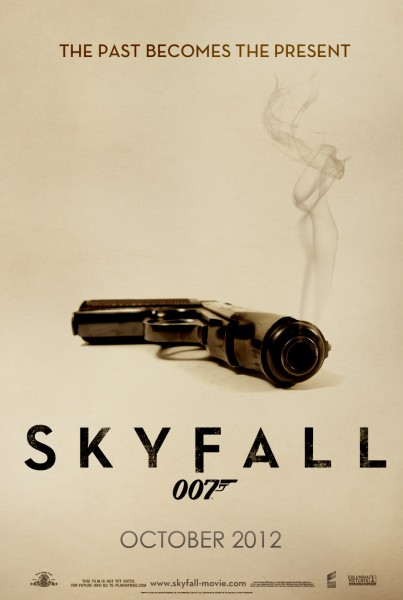
     Can't say that I am a huge fan of the Bond franchise. Sure, the films are fun--a mild diversion to get you away from your everyday life. But the old ones are a tough sit through, and the Brosnan films are chipper but cheesy. It wasn't until the steely-eyed Daniel Craig took the reigns that Bond became worthwhile for me, with their new-found slickness and dark sensibility. And Skyfall, in all its personal and simple glory, is the best one yet: a Bond movie that feels like it should actually exist on its own right instead of being just a bi-yearly predictable incarnation. And by giving a wink to the past Bond films--instead of giving fully in to their absurdity--Skyfall became a great blend of 21st century Bond fun. 


5.
Zero Dark Thirty

     You can call Zero Dark Thirty, the new film directed by Kathryn Bigelow (creator of the wonderful The Hurt Locker), a meticulous story about the pursuit and killing of Osama Bin Laden. But--ultimately--it's significantly more than that too: it's a story directed by a determined woman (rare in Hollywood these days) about a determined woman. Jessica Chastain portrays Maya, and she gives one of the top two performances of the year. She's a woman who would do anything to find and kill the most well-known terrorist in the world. But the really brilliant thing about Zero Dark Thirty is that it's truly a non-biased view of the investigation leading to his assassination. Draw your own conclusions about how effective torture is: I'll draw the conclusion that Zero Dark Thirty is one of most intense films of the year.


4.
Silver Linings Playbook

     Silver Linings Playbook was a big surprise for me: the trailer for film looked dull and corny. But it was misleading--it's one of those films where the jokes that fall flat in the preview are seamlessly integrated into the actual movie when you watch it all the way through. It's the best romantic comedy of the year, and it's actually an evolution for the genre: instead of stereotypes that revolve around unhappy women and men who need to be broken in like puppies, Silver Linings has real characters that live their lives full of real problems--mental illness, death, and loneliness all play a role. Not to mention it has two of the best performances of the year: Bradley Cooper (never thought I'd see him next to the words "Best Performance") as Pat Jr. and Jennifer Lawrence as Tiffany. 


3.
The Grey

     This is one of those choices that many people will think is a little kooky. A movie starring Liam Neeson that's about a group of plane crash survivors fending off a pack of wolves in the snowy wilderness? It was easy to dismiss. But you'd be wrong to give up The Grey, to write it off as another cashed paycheck in the pantheon of Liam Neeson films. It's a survival story with a philosophical edge, a movie about the choices you have to make in the face of death when you realize that God isn't coming to help you. It's an incredibly bleak vision for some: all hope is lost so what's the point of fighting anymore? When one realizes that this life is all there is...plenty. 


2.
Looper

     Looper, the best sci-fi film of the year and directed by Rian Johnson, smartly makes a decision early on in its run time: instead of focusing on the intricacies of time travel (which is the biggest plot device of the movie, after all), it throws those discussions to the wayside and lets the cool action and slick direction take the viewer on a fun and violent ride. Featuring Joseph Gordon-Levitt and Bruce Willis playing old and young versions of the same character in a futuristic cat and mouse game, Looper is incredibly solid sci-fi entertainment containing hovercrafts, blasting blunderbusses, telekinetic freaks and an original nature vs. nurture debate. 


1.
The Master

     2012 had quite a large number of films that I was incredibly excited for that didn't at all live up to my expectations: namely, Ridley Scott's sort-of-Alien prequel Prometheus and the overlong The Hobbit. Others came extremely close to meeting them, but not quite: The Dark Knight Rises and Django Unchained were both great, but I thought that either could have been my number one film of the year before I watched them. Considering Paul Thomas Anderson has written and directed two of my favorite films of all time (Magnolia and There Will Be Blood) and two others that I still love (Punch-Drunk Love and Boogie Nights), its safe to say that The Master--a story about an alcoholic veteran who returns home only to get sucked in by a Scientology-esque religious leader--was one of my most anticipated films of the year. And there's one reason why The Master is my number one film of 2012: it met those incredibly high expectations.  Beautifully acted by Joaquin Phoenix and Philip Seymour Hoffman and gorgeously directed by Paul Thomas Anderson, The Master is one of those rare American films for smart adults: a challenging and transfixing story that can leave you meditating on its questions for days on end. 

Sunday, January 6, 2013

Overlooked Films from 2012

       As the year of film comes to a close, there are always a few stray cinematic experiences that need to be seen before I feel comfortable making a year-end Top 10 list (either they were not released in Maine or I wanted to wait until the Blu-Ray release), but I usually see everything that I need to see before the end of January. Though I (almost) have that list all figured out, I figured it would be a good idea to look at some films that didn't make the cut in 2012, films that I didn't review during the calender year, films that were shining gems in their own right. Hopefully these six films will spark your interest about movies that you've never heard of or remind you about that one title that you heard about in January but you had forgotten about by December. Off we go:


We Need to Talk About Kevin
     Technically released overseas in 2011, it then flew to our shores for a limited theater run in January of 2012. Based on the novel of the same name by Lionel Shriver, We Need to Talk About Kevin stars the great Tilda Swinton and is more relevant than ever in the violent wake of the Sandy Hook school shooting. Eva (Swinton) is the mother of Kevin, a child with serious violent tendencies and a sickening inability to relate to other human beings. As he grows older (and grows more angry), a significant question arises: in this nature vs. nurture debate, is Eva at fault when Kevin plunges to the depths of a killer? Or is Kevin's mental illness totally to blame? Swinton's performance in Kevin is one of the best of her career.


Headhunters 
     One of the most entertaining recent films to come out of Norway, Headhunters is based on a novel by the hugely popular Jo Nesbo (I just finished a book in his series of detective novels starring alcoholic cop Harry Hole). The film is totally over-the-top absurdest fun: Roger is a rich employment recruiter for a flashy company who also steals expensive pieces of art to maintain his meretricious lifestyle. When he gets introduced to Clas (Nikolaj Coster-Waldau, who is Jaime Lannister of HBO's Game of Thrones fame), a man who is supposedly in possession of an extremely valuable painting, Roger gets into a violent and unbelievable cat-and-mouse game with twists and turns that are as implausible as they are fun. A strange and funny take on a common thriller story. (Subtitled.)


Magic Mike
     I'm not ashamed to admit that one of the more interesting films this year was about male strippers and starred Channing Tatum (supposedly based upon some of his real life escapades). It was also directed by Steven Soderbergh, who has a knack for making any subject--a rapidly-spreading virus in Contagion, the illegal drug trade in Traffic, whistle-blowing in The Informant!--peculiar and watchable. Mike (Tatum) has a variety of jobs, but he makes the most money working for Dallas (Matthew McConaughey in a good performance) at a high-end strip club in Tampa, FL. When Mike takes young Adam under his wing, the film fills with funny sequences and moral quandaries about capitalism and voyeurism in America, where taking your clothes off for money is sometimes the best career path. 


The Queen of Versailles
     Keeping with the theme about the U.S. economy, The Queen of Versailles is a documentary that is funny, touching, sad and very watchable. It's about the pursuit of the American dream, when that dream has become obtaining the biggest house ever built on American soil. Jackie and David Siegel own Westgate Resorts (a timeshare company) a hugely successful business that has made them billions. But when they try to build a 90,000 square foot house that mimics that elaborateness and intricacy of a palace, the world around them begins to crumble. Filmed over a couple of years, their empire falls and the large family tires to adapt to their new lifestyle of coupon cutting and cleaning up their own dog shit. It's an intimate look at a failing family where greed used to rule. 


Shut Up and Play the Hits
     Another documentary, this one my favorite of the year, almost cracking my official Top 10 list. Shut Up and Play the Hits follows the front-man (James Murphy) of LCD Soundsystem, not even arguably one of the greatest musical acts of the past 10 years, as he prepares for his final show at Madison Square Garden. Unlike 99% of the musical puke that's barfed onto radio waves, Murphy decided to end this fruitful band after only three major albums (all modern classics). His music, a blend of electronic dance/punk/indie rock, is the real showcase, as much of the documentary provides the viewer with incredible renditions of his best songs (the final concert was actually 3.5 hours, and the Blu-Ray has two separate discs showing it in its hi-def entirety). A great interview with the awesome writer Chuck Klosterman narrates much of the film as a lingering sadness starts to envelop Murphy's last hurrah. Don't mess around with this one: watch on a good sound system with the volume on high. 


Beasts of the Southern Wild
     Released to a critical fervor at Sundance film festival earlier in the year, Beasts of the Southern Wild is a visually transfixing film with a touching story about a girl named Hushpuppy and the cutoff-from-a-flood community that she inhabits. Wandering among the elements and creatures, alone in life except for a poor, abusive father and select group of colorful and strange characters, Hushpuppy must learn to survive and thrive in a world cut off from the world. An unknown face at the incredible age of six years old, Quvenzhane Wallis embodies the character with a wonder and an aptitude that the most polished actors would be jealous of. The film's a real and original work of Americana art. 

Sunday, December 30, 2012

Tarantino Deconstructs Slavery in Django Unchained

     When a new Tarantino film is announced, it's like an unexpected and surprising gift. The first question is usually the same: what subject will be the focus of his signature and singular style? In 1997, Jackie Brown was his homage to the Pam Grier Blaxploitation flicks of the 1970's. Six years later, we got the wonderful Kill Bill, the ultra-bloody and winking nod to the Kung-Fu films of Asian cinema that he was infatuated with during his childhood.  Then just three years ago, Inglorious Basterds--the best film of 2009--was a World War II revenge fantasy that was as funny as it was exciting. Django Unchained, released on Christmas day, is his newest, a love-letter to the Spaghetti Westerns of yore with a slavery-focused plot that doesn't pretend to be politically correct: the N-word flows more freely than the brimming blood--and there is a lot of blood. What it all amounts to is a fun and simple film that doesn't rank among the director's best work but is still one of the more entertaining and stylistic films of the year.
     Jaime Foxx is the titular character, Django, and he and his wife are slaves that get split up in a trade. While he's being transported with a group of other chained slaves, we meet Dr. King Schultz (Christoph Waltz), a dentist/bounty hunter who needs Django to identify a trio of brothers that have large bounties on their heads. So he buys and frees him, and the two team up in buddy-comedy style fashion. The two work well of each other. Foxx plays Django as a quiet man on a mission. Will Smith was actually offered the role of Django, but Foxx is a better choice: his gruff stares and I've-been-through-everything confidence makes you hopeful for his inevitable revenge. Waltz, just as he chewed every scene in Inglorious Basterds, is the best aspect of Django. But that's just as much a testament to Tarantino's script, specifically his signature dialogue that allows for comical pauses and mannerisms that really suit Waltz's acting style.
     The first half of Django Unchained has some comical scenes that are hit-or-miss. It's great first meeting Dr. Schultz, with his horse carriage that has a large fake tooth on a spring on top, swinging back and forth signifying that he's a dentist. A less funny scene involves some Klanish men complaining on and on about how they can't see out of their white hood eye holes because the notches are not cut large enough. It's not unfunny because it's offensive--it's just repetitive. Though there is something to be said about how uncomfortable it is laughing at certain aspects of Django in a theater with a bunch of other white people. No punches are pulled: the N-word is used in all matter of scenes, joking or serious. But this is how these men and women would talk during this time period in this location. They wouldn't hesitate using this type of language without even thinking twice about it, just like we don't think twice about any normal word we use on a daily basis as Americans living in the year (almost) 2013. Spike Lee can cry all he wants--it's an honest and unflinching look at certain aspects of the horrors of slavery.
     Django really picks up when our heroic duo enters "Candy Land", a plantation where Django's wife is being held. It's called that because it's owned by Calvin Candie (Leonardo Dicaprio), a horrific person whose love for racism is only outmatched by his love for "Mandingo" fighting, a form of battling to the death between two black slaves for entertainment of white folk. Dicaprio's performance is definitely a highlight of Django, though playing a villain in a Tarantino film seems not too difficult given the screenwriter's eye for vicious and violent characters. Another high (and surprising) point is the performance of Samuel L. Jackson, who portrays Candie's so-called "House Ni**er", a man with tons of self pity, a black man who is disgusted by black people. When Django rides into Candy Land on a horse (since he is a free man due to Dr. Schultz), Jackson's reaction and performance (for the rest of the film, really) is funny and transfixing.
     Like in Kill Bill Vol. 1, Django Unchained builds inevitable Tarantino tension to a final showdown that involves over-the-top violence and hundreds of gallons of blood. The killings are not too serious or realistic: gunshot wounds spurt gobs of blood that would fill up a bathtub, almost like a bullet entering the body would shoot out every ounce of plasma out of the sizzling hole. It's cartoonish and eventually grows a bit tiresome, mainly because the shootouts are not quite as innovate as the large-scale combat in Kill Bill Vol 1. or the intimate basement bar scene in Inglorious Basterds. And that's a good sum up about how I feel about Django Unchained: it's got the typical moments of  fun brilliance that Tarantino is known for, but it never really matches the highs of his previous cinematic oeuvre, and at nearly three hours, it's a bit overlong too.
     Another problem with the film: for a movie called "Django Unchained", you would think the character of Django would become "unchained", become empowered, become something larger than himself. But that doesn't really happen. It's more of a white man's fantasy film: the white Dr. Schultz frees Django, he helps Django, and when an important moment of standing up to tyranny occurs, its the white Dr. Schultz that takes action instead of the former slave. Foxx's Django rarely does anything meaningful in regards to taking control of his situation. He's perfectly happy with Schultz leading the way. Ultimately, though, this is just a fun film about slavery (seems like an oxymoron) that is full of both horror and humor. I just wish Django had taken a more serious stand against that horror.     (B+)

Saturday, December 29, 2012

No Need to Find a Silver Lining in Silver Linings Playbook

      Bradley Cooper has gotten a bad wrap, but one that has been earned: with film choices like The Hangover, the dreadful Hangover 2, the nap-inducing action movie The A-Team, and the I-think-I-just-threw-up-in-my-mouth ensemble comedy Valentine's Day, Cooper has proven that he doesn't mind being in throwaway films that have no home on the cinematic landscape. It's surprising, then, that he shines so bright in Silver Linings Playbook--based on the book of the same name by Matthew Quick--a film directed by David O Russell that's real and emotional and full of moments that make you wish more films touched upon this type of exciting terrain.
     Pat (Cooper) is Bipolar, and when we first meet him he's being released from a mental institution (which he was attending for beating someone almost to death, though I won't get into specifics). Pat's changed significantly since he's been locked away: he's lost a bunch of weight, works out a lot, and tries to be much more positive about everything in life--tries to find the silver lining no matter the situation. He has one goal: do absolutely everything in his power to get his wife back; unfortunately, she has a restraining order against him. It's quickly clear that Pat still has some major issues to deal with, particularly when he moves back in with his parents, Pat Sr. (Robert Deniro, in one of his best roles in years) and Dolores (Jacki Weaver, who was so good in that little Australian crime drama, Animal Kingdom). When examining Deniro's character, it's certain that Pat Jr. has inherited some of his dad's traits: Pat Sr. is obsessed with the Philadelphia Eagles (NFL football plays a major role in Silver Linings), and he has an OCD nature in regards to remote control placement and who is sitting where on the sofa when watching the game. He isn't allowed at the stadium anymore--he's beaten up too many fans. 
     In his journey to win back his wife, Pat happens upon Tiffany (the always-transfixing Jennifer Lawrence), a young widow who is dealing with some major emotional issues of her own. Tiffany's a great foil to Pat: she doesn't deal with any of his shit and calls him out when he's clearly in the wrong. Lawrence herself is awesome. If you're looking for her pivotal performance of 2012, put The Hunger Games back on the shelf and look no further than here. She (emotionally) bares all. As they start to build a friendship, it's obvious that Tiffany want's more than just a crazy guy to hang out with. But Pat doesn't want to cheat on his wife, even though he hasn't seen her for almost a year. This tension propels the film into a funny and nerve-wracking final third that involves a huge bet, a dance competition, and the finding of true love.
      But Cooper is the real star in Silver Linings Playbook. His portrayal of Pat is funny and dangerous: this is a man that speaks with "no filter", a man who could go off on a violent tangent at any given moment--a nostalgic song or an Ernest Hemingway book could set him off. He feels real, like a friend or a friend of a friend. David O Russell's direction keeps things moving, too. I remember watching the trailer for this film a few months back: I thought it looked like utter crap with dull jokes and a predictable story. But that couldn't be further from the truth. Like his work in 2010's The Fighter, everything melds together into a wonderful fast-paced story about a man trying to accomplish his goals, whether that be winning a boxing title or winning his wife back.
     There are so many things going on in Silver Linings, yet the sum of every aspect equals one of the best romantic films of the year, a movie that is truly of our time. Like Pat, the film itself is all over the place: at one moment you could be shocked by the things that it says, one moment can bring tears to your eyes and another moment can give you a wide smile from its humor. By the time we get to know these characters and the film is almost over, the outcome may seem like it's going to be predictable. It doesn't especially make a difference, because the journey of watching Silver Linings Playbook--a romantic drama that is one of the best films of the year--surely isn't.      (A-)


Sunday, December 23, 2012

An Unexpected Journey: 1/3 of The Hobbit Trilogy and 1/3 of a Great Movie

     The Lord of the Rings trilogy, arguably the most beloved group of fantasy novels this side of A Song of Ice and Fire, amassed over 1100 pages of written word by J. R. R. Tolkien throughout the years. Nine years ago, director Peter Jackson miraculously finished turning those 1100 dense pages into three films that were perfect in their emotional depiction of Frodo's epic journey with The Ring. Flash forward to this year and Peter Jackson is showing the world his first film in a new trilogy based on The Hobbit, Tolkien's more lighthearted story that weighs in at just over...300 pages. So, 1100 pages = 3 films for the first trilogy, and 300 pages = 3 films for the second trilogy. Something doesn't feel quite right, and it's not: Jackson's first film in the so-called Hobbit trilogy, subtitled An Unexpected Journey, has plenty of exciting action and incredible special effects, but with a run time of nearly three hours, they are few and far between. It's a small story that's going to be stretched into a long film series, and this first film suffers for it--it's mostly set-up instead of sensational.
     The story is set 60 years before the events of Lord of the Rings: Bilbo Baggins (now portrayed by a younger Martin Freeman instead of Ian Holm of the original Rings films) is living a nice quiet life on the hillside, with gorgeous sunlit views and scrumptious food. Wizard Gandalf (Ian McKellen, who hasn't missed a beat since playing the The Grey in the original trilogy) shows up, smoking his peace pipe, and he convinces Bilbo to go on an adventure (an unexpected journey, if you will). So in walk 13 dwarfs, and the group sets out on dangerous mission...wait, no they don't. Jackson focuses on these new characters for as long as time will allow: they eat all of Bilbo's food, make fun of Bilbo, tell stories, sing songs, and put away dishes quicker than the forest animals in Snow White. They try to convince Bilbo to go, but he's reluctant. They try to convince him even more--a clear problem in trying to expand this story into three films.
     Inevitably, off they go on their adventure! The dwarfs are led by Thorin Oakenshield (Richard Armitage), and they are questing across Middle Earth to attempt to reclaim their homeland, The Lonely Mountain, which is now the lair of a powerful Dragon named Smaug (we see barely a glimpse of the fire-breather in this installment). Bilbo and Gandalf tag along for moral support. Even the most devoted fans of the Rings universe will grow somewhat weary of the proceedings: there's a lot of walking and talking and orc-fighting, then more running and yelling and vacationing at an Elvish resort that almost put me to sleep. There's no real tension or danger: we know Bilbo lives because he's a character in Lord of the Rings, we know there are two more installments in this story, and every single time the group is super far up shit creek, Gandalf casts a spell or kisses a butterfly and enemies turn to stone or giant eagles swoop in to carry the group to safety.
     Martin Freeman does a fine job as Bilbo, showing off some of the same awkward nice-guy charm and sarcasm that he displayed so well in the British (definitive) version of The Office. The other performances are solid, too. The visuals are the other major problem with this first installment of The Hobbit. I'm hesitant to criticize a film because of its 3-D or frame rate. But Peter Jackson has made an interesting decision with An Unexpected Journey: he filmed it in 48 FPS instead of the standard 24 FPS. (You can only see this 48 FPS version at certain theaters, maybe only Westbrook in Maine...it is sometimes referred to as "HFR"). This decision was made to reduce motion blur and flickering that can be found in fast-paced films that are filmed at 24 FPS (basically every film now produced). A few things can be said about the higher frame rate: it is incredibly realistic. You won't see a clearer image in film, and it causes some scenes to be strikingly beautiful. But it has the feel of a new television's settings, where everything is sped up a little and looks like it has been filmed with a video camera. A very non-cinematic feel. Consequently, I don't care to ever see a movie filmed in 48 frames per second ever again. The 3-D, in its typical atrocity, muddies the image in a dark tint and induces the normal rubbing of eyes.
     Late into the run time of An Unexpected Journey, Bilbo falls down into a cave that is patrolled by a Rings favorite, Gollum (portrayed brilliantly with motion capture by Andy Serkis, again). He adds an excitement and danger that had been lacking in the film until that point, especially when he loses his ring and suspects Bilbo of the thievery. But this feeling is really just nostalgia for the original Rings trilogy, when excitement, danger and tension lurked among every dark place like a ring wraith waiting for the kill. There was no filler, because there was no time for filler. The same can't be said for this first third of The Hobbit story, though Peter Jackson did do something correctly: he left plenty of room for improvement.     (C+) 

Monday, December 10, 2012

Life of Pi, a Feast for the Eyes

     When the news was announced a couple years ago that Yann Martel's 2001 book, Life of Pi, was going to be adapted into a feature film, most readers were curious and apprehensive. They were concerned that the set-up of the story--where a young boy named Pi spends hundreds of days at sea in a life boat with a zebra, an orangutan, and a Bengal tiger named Richard Parker--wouldn't translate to the world of film. The director certainly couldn't use real animals; it would be far too dangerous and much too difficult. Then the film adaptation gained two more curiosities: the director would be Ang Lee, a talent that fared well with small dramas (Brokeback Mountain) but produced mixed results with big budgets (The Hulk). And it would also be in 3-D, the fad that typically doesn't add anything to a film other than a couple extra dollars to the price of an already-expensive movie ticket.
     Dodging the difficulties of the source material like Pi dodges the tiger as they float in the same boat far out to sea, Ang Lee defies the large expectations and creates a really solid film that starts slow (like the book) but becomes an arresting and emotional experience that is an incredible visual eyegasm, using 3-D as part of the entire experience instead of a cheesy gimmick. Everything is gorgeous: the rolling ocean, the real and CGI animals, the hallucinogenic dream sequences. Not unlike last year's Hugo, Life of Pi is a story for every age group that has a wondrous quality that reaffirms the hope that cinema can make a viewer feel, and although some of the lessons--about the power of divinity and the importance of storytelling--are obvious and not too deep, Lee's poetic cameras sail the film almost into my list of the year's best.
     The Pi of the film's title is Piscine Patel, and he's played by three different actors during three different time periods. The film starts with the adult Pi (Irrfan Khan) telling his life story to a writer looking for inspiration. As a young boy, Pi was picked on for his name (the local child bullies called him "Pissing"). His family owned a zoo full of exotic and dangerous creatures. Ever curious about life and the reason for "being", he begins to fall in love with the curiosity of religion, adapting certain beliefs from Hinduism, Christianity and Islam. Eventually, Pi's father decides that the Zoo isn't profitable anymore: he's going to move his family and all of the animals across the ocean on a big ship, settling in Canada and selling the creatures for a profit.


     The film goes from slow to stupendous during this trip across the sea. Pi is now a teenager, and he's portrayed by Suraj Sharma. His performance is the second best part of Life of Pi after the technical aspects: Sharma showcases a curiosity and kindness that helps ground the overpowering beauty of the film. It's no secret that the large ship (during a very large storm) succumbs to the hungry ocean and Pi escapes to the lifeboat with a few furry friends (or foes...). Pi must brave every aspect of the sea to survive. He keeps his mind occupied by trying to tend to the tiger instead of trying to get rid of it (he even saves its life at one point instead of letting it drown in a particularly sad scene). Does Pi find God? Can religion save him from the deep depths of the ocean? Or will his hope and will to survive come from different means? 
     Who really cares? Just look at how gosh darn pretty that 3-D is! It really is maybe the best use ever. It doesn't smash you over the head with jumpy things flying at you. It really adds another dimension to the film, which is rare in 3-D in this day and age. Enough can't be said about how good Life of Pi looks: you're doing yourself a disservice if you're planning on viewing the film once it gets released on Blu-Ray (Jesus...don't tell me you were going to watch it on DVD quality). See it in the theater with the annoying 3-D glasses, preferably on the biggest screen possible. 
     I won't ruin it for non-book readers, but the ending of Life of Pi (the book and the film) gives the viewer/reader a disturbing choice. This choice becomes an open-ended question that a viewer could ponder for as long as they desired. It's too bad that some of Pi's curiosities about life and its lessons before that reveal are simple and are not cause for too much thought. Ultimately, Lee's version of Life of Pi is just as enjoyable as the very popular book, due to it's incredible beauty and poetic nature. But since the film's technical aspects are so impressive and its story a bit easy, I found it hard not to judge this book by its cover.     (B+)