Sunday, January 13, 2013

Top 10 Films of 2012

   
      The year of film 2012 was a time of possibility, a time of high expectations and week after week of seminal viewing experiences in the last quarter of the year. I barely had the time to write reviews in November and December, since every week was a new film that needed to be seen to have my comprehensive list be taken seriously at all. The biggest surprises? I never could have guessed that Prometheus wouldn't even crack my top 25 and that Taken 2 would be my least favorite film (more like extended television commercial) of the year (okay, maybe it was This Means War). 

     I saw 64 films released in the year 2012. That doesn't include the ones I've watched twice (or three times). A Top 10 list was a tough one this year, at least for the bottom half. Tough for a reason: I wouldn't quite call Top 10 lists arbitrary--surely they arn't totally random or devoid of any sort of system--but opinions can change on a day to day (or view to view) basis. I've switched out the last film on my list maybe a dozen times, depending on mood, another watch, or a few extra minutes of quiet thoughtfulness about the project.

    For example, on first viewing I found Wes Anderson's film Moonrise Kingdom to be a joyous experience, a film of nostalgia and young love that ranked among his best films. But a re-watch showed that maybe the film was a bit slight, a bit too typical of Anderson's always-there eccentricity. Seven Psychopaths and Killing Them Softly are two films that were tied for a place on my list a couple months ago: their similar dismantling of genre conventions (both in their own way), clever/vulgar scripts, and extreme violence left a lasting impression--just not lasting enough. And who could forget--maybe the most anticipated film of the year for many people--The Dark Knight Rises, the culmination of excitement of Chris Nolan's Batman trilogy. It was a fitting--not incredible--end.

So here we are: ten films that I still think about (especially one of them, since I saw it within one hour of writing this) now that the year has passed. These are films that I would be glad to pop into the Blu-Ray player and watch again at any moment, films that--in this exact second in time--are my favorites of the year 2012.


10.
Lincoln

     You can call it what you want. A history lesson? A predictable story? A plot that would fare better watching at a real theater instead of a movie cinema? Sure, it's all of those things. But it also includes many wonderful aspects: another astonishing performance from Daniel Day-Lewis, a lifelike script written by Tony Kushner, and a film that's packed full with so many fruitful supporting performances that it's ripe to burst, namely Sally Field and Tommy Lee Jones in two of the best roles of their careers. Not to mention an entertaining story about political backroom dealings and good direction by Steven Spielberg that mostly avoids his sometimes-eye-rolling sentimentality.


9.
Django Unchained

     One question kept entering my mind while watching Django Unchained, the new spaghetti western slavery epic by Quentin Tarantino: if I had black skin--instead of white--how would I feel about what I was watching on the big screen, essentially a tongue-in-cheek vengeance tale of a black slave getting freed and murdering racists and plantation owners? Probably about the same as I do now: this shit, though never quite reaching the greatness of  most of Tarantino's previous efforts (namely Inglorious Basterds and Pulp Fiction), is typical awesomeness from the director, full of stylistic entertainment, humor, and a bold vision of slavery that hopefully kicks down the door for other worthwhile stories about the horrific subject. 


8.
Argo

    Ben Affleck got snubbed for a Best Director nomination at the Oscars this year. I'm not sure why: his steady handle at the controls of Argo is one of the main reasons it makes this list. After Gone Baby Gone, The Town, and now this, it's clear that the (sometimes laughable) actor is much more adept at creating tension behind the camera, though his acting performance in Argo is also something to be praised. Showcasing an intricate sense of place and detail, Argo is Affleck's best film yet, a film that's still suspenseful even though the outcome is well-known. By leaving his comfort zone of stories set in Boston, we leave the comfort zone with him, and the result couldn't have been much better.


7.
The Sessions

     The Sessions is an adult movie about sex that doesn't resort to gross-out gags or one-liner dick jokes. John Hawkes gives one of the best performances of the year (and coincidentally was another Oscar snub) as  Mark, a poet paralyzed from the neck down due to polio. Wanting to lose his virginity and experience the glorious wonder of a woman's vagina, Mark hires Cheryl (Helen Hunt) a sex surrogate who specializes in getting down and dirty with the disabled. It's heartfelt, touching and emotional. 


6.
Skyfall
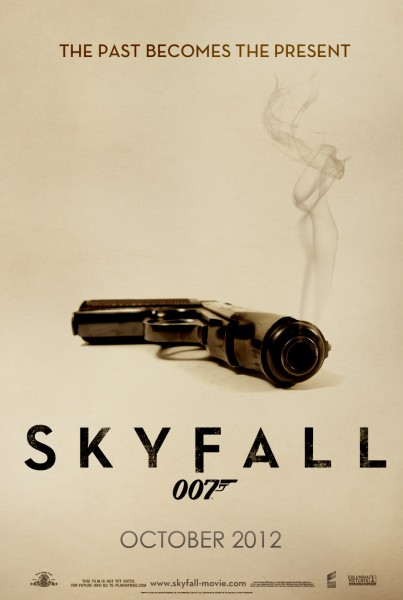
     Can't say that I am a huge fan of the Bond franchise. Sure, the films are fun--a mild diversion to get you away from your everyday life. But the old ones are a tough sit through, and the Brosnan films are chipper but cheesy. It wasn't until the steely-eyed Daniel Craig took the reigns that Bond became worthwhile for me, with their new-found slickness and dark sensibility. And Skyfall, in all its personal and simple glory, is the best one yet: a Bond movie that feels like it should actually exist on its own right instead of being just a bi-yearly predictable incarnation. And by giving a wink to the past Bond films--instead of giving fully in to their absurdity--Skyfall became a great blend of 21st century Bond fun. 


5.
Zero Dark Thirty

     You can call Zero Dark Thirty, the new film directed by Kathryn Bigelow (creator of the wonderful The Hurt Locker), a meticulous story about the pursuit and killing of Osama Bin Laden. But--ultimately--it's significantly more than that too: it's a story directed by a determined woman (rare in Hollywood these days) about a determined woman. Jessica Chastain portrays Maya, and she gives one of the top two performances of the year. She's a woman who would do anything to find and kill the most well-known terrorist in the world. But the really brilliant thing about Zero Dark Thirty is that it's truly a non-biased view of the investigation leading to his assassination. Draw your own conclusions about how effective torture is: I'll draw the conclusion that Zero Dark Thirty is one of most intense films of the year.


4.
Silver Linings Playbook

     Silver Linings Playbook was a big surprise for me: the trailer for film looked dull and corny. But it was misleading--it's one of those films where the jokes that fall flat in the preview are seamlessly integrated into the actual movie when you watch it all the way through. It's the best romantic comedy of the year, and it's actually an evolution for the genre: instead of stereotypes that revolve around unhappy women and men who need to be broken in like puppies, Silver Linings has real characters that live their lives full of real problems--mental illness, death, and loneliness all play a role. Not to mention it has two of the best performances of the year: Bradley Cooper (never thought I'd see him next to the words "Best Performance") as Pat Jr. and Jennifer Lawrence as Tiffany. 


3.
The Grey

     This is one of those choices that many people will think is a little kooky. A movie starring Liam Neeson that's about a group of plane crash survivors fending off a pack of wolves in the snowy wilderness? It was easy to dismiss. But you'd be wrong to give up The Grey, to write it off as another cashed paycheck in the pantheon of Liam Neeson films. It's a survival story with a philosophical edge, a movie about the choices you have to make in the face of death when you realize that God isn't coming to help you. It's an incredibly bleak vision for some: all hope is lost so what's the point of fighting anymore? When one realizes that this life is all there is...plenty. 


2.
Looper

     Looper, the best sci-fi film of the year and directed by Rian Johnson, smartly makes a decision early on in its run time: instead of focusing on the intricacies of time travel (which is the biggest plot device of the movie, after all), it throws those discussions to the wayside and lets the cool action and slick direction take the viewer on a fun and violent ride. Featuring Joseph Gordon-Levitt and Bruce Willis playing old and young versions of the same character in a futuristic cat and mouse game, Looper is incredibly solid sci-fi entertainment containing hovercrafts, blasting blunderbusses, telekinetic freaks and an original nature vs. nurture debate. 


1.
The Master

     2012 had quite a large number of films that I was incredibly excited for that didn't at all live up to my expectations: namely, Ridley Scott's sort-of-Alien prequel Prometheus and the overlong The Hobbit. Others came extremely close to meeting them, but not quite: The Dark Knight Rises and Django Unchained were both great, but I thought that either could have been my number one film of the year before I watched them. Considering Paul Thomas Anderson has written and directed two of my favorite films of all time (Magnolia and There Will Be Blood) and two others that I still love (Punch-Drunk Love and Boogie Nights), its safe to say that The Master--a story about an alcoholic veteran who returns home only to get sucked in by a Scientology-esque religious leader--was one of my most anticipated films of the year. And there's one reason why The Master is my number one film of 2012: it met those incredibly high expectations.  Beautifully acted by Joaquin Phoenix and Philip Seymour Hoffman and gorgeously directed by Paul Thomas Anderson, The Master is one of those rare American films for smart adults: a challenging and transfixing story that can leave you meditating on its questions for days on end. 

Sunday, January 6, 2013

Overlooked Films from 2012

       As the year of film comes to a close, there are always a few stray cinematic experiences that need to be seen before I feel comfortable making a year-end Top 10 list (either they were not released in Maine or I wanted to wait until the Blu-Ray release), but I usually see everything that I need to see before the end of January. Though I (almost) have that list all figured out, I figured it would be a good idea to look at some films that didn't make the cut in 2012, films that I didn't review during the calender year, films that were shining gems in their own right. Hopefully these six films will spark your interest about movies that you've never heard of or remind you about that one title that you heard about in January but you had forgotten about by December. Off we go:


We Need to Talk About Kevin
     Technically released overseas in 2011, it then flew to our shores for a limited theater run in January of 2012. Based on the novel of the same name by Lionel Shriver, We Need to Talk About Kevin stars the great Tilda Swinton and is more relevant than ever in the violent wake of the Sandy Hook school shooting. Eva (Swinton) is the mother of Kevin, a child with serious violent tendencies and a sickening inability to relate to other human beings. As he grows older (and grows more angry), a significant question arises: in this nature vs. nurture debate, is Eva at fault when Kevin plunges to the depths of a killer? Or is Kevin's mental illness totally to blame? Swinton's performance in Kevin is one of the best of her career.


Headhunters 
     One of the most entertaining recent films to come out of Norway, Headhunters is based on a novel by the hugely popular Jo Nesbo (I just finished a book in his series of detective novels starring alcoholic cop Harry Hole). The film is totally over-the-top absurdest fun: Roger is a rich employment recruiter for a flashy company who also steals expensive pieces of art to maintain his meretricious lifestyle. When he gets introduced to Clas (Nikolaj Coster-Waldau, who is Jaime Lannister of HBO's Game of Thrones fame), a man who is supposedly in possession of an extremely valuable painting, Roger gets into a violent and unbelievable cat-and-mouse game with twists and turns that are as implausible as they are fun. A strange and funny take on a common thriller story. (Subtitled.)


Magic Mike
     I'm not ashamed to admit that one of the more interesting films this year was about male strippers and starred Channing Tatum (supposedly based upon some of his real life escapades). It was also directed by Steven Soderbergh, who has a knack for making any subject--a rapidly-spreading virus in Contagion, the illegal drug trade in Traffic, whistle-blowing in The Informant!--peculiar and watchable. Mike (Tatum) has a variety of jobs, but he makes the most money working for Dallas (Matthew McConaughey in a good performance) at a high-end strip club in Tampa, FL. When Mike takes young Adam under his wing, the film fills with funny sequences and moral quandaries about capitalism and voyeurism in America, where taking your clothes off for money is sometimes the best career path. 


The Queen of Versailles
     Keeping with the theme about the U.S. economy, The Queen of Versailles is a documentary that is funny, touching, sad and very watchable. It's about the pursuit of the American dream, when that dream has become obtaining the biggest house ever built on American soil. Jackie and David Siegel own Westgate Resorts (a timeshare company) a hugely successful business that has made them billions. But when they try to build a 90,000 square foot house that mimics that elaborateness and intricacy of a palace, the world around them begins to crumble. Filmed over a couple of years, their empire falls and the large family tires to adapt to their new lifestyle of coupon cutting and cleaning up their own dog shit. It's an intimate look at a failing family where greed used to rule. 


Shut Up and Play the Hits
     Another documentary, this one my favorite of the year, almost cracking my official Top 10 list. Shut Up and Play the Hits follows the front-man (James Murphy) of LCD Soundsystem, not even arguably one of the greatest musical acts of the past 10 years, as he prepares for his final show at Madison Square Garden. Unlike 99% of the musical puke that's barfed onto radio waves, Murphy decided to end this fruitful band after only three major albums (all modern classics). His music, a blend of electronic dance/punk/indie rock, is the real showcase, as much of the documentary provides the viewer with incredible renditions of his best songs (the final concert was actually 3.5 hours, and the Blu-Ray has two separate discs showing it in its hi-def entirety). A great interview with the awesome writer Chuck Klosterman narrates much of the film as a lingering sadness starts to envelop Murphy's last hurrah. Don't mess around with this one: watch on a good sound system with the volume on high. 


Beasts of the Southern Wild
     Released to a critical fervor at Sundance film festival earlier in the year, Beasts of the Southern Wild is a visually transfixing film with a touching story about a girl named Hushpuppy and the cutoff-from-a-flood community that she inhabits. Wandering among the elements and creatures, alone in life except for a poor, abusive father and select group of colorful and strange characters, Hushpuppy must learn to survive and thrive in a world cut off from the world. An unknown face at the incredible age of six years old, Quvenzhane Wallis embodies the character with a wonder and an aptitude that the most polished actors would be jealous of. The film's a real and original work of Americana art. 

Sunday, December 30, 2012

Tarantino Deconstructs Slavery in Django Unchained

     When a new Tarantino film is announced, it's like an unexpected and surprising gift. The first question is usually the same: what subject will be the focus of his signature and singular style? In 1997, Jackie Brown was his homage to the Pam Grier Blaxploitation flicks of the 1970's. Six years later, we got the wonderful Kill Bill, the ultra-bloody and winking nod to the Kung-Fu films of Asian cinema that he was infatuated with during his childhood.  Then just three years ago, Inglorious Basterds--the best film of 2009--was a World War II revenge fantasy that was as funny as it was exciting. Django Unchained, released on Christmas day, is his newest, a love-letter to the Spaghetti Westerns of yore with a slavery-focused plot that doesn't pretend to be politically correct: the N-word flows more freely than the brimming blood--and there is a lot of blood. What it all amounts to is a fun and simple film that doesn't rank among the director's best work but is still one of the more entertaining and stylistic films of the year.
     Jaime Foxx is the titular character, Django, and he and his wife are slaves that get split up in a trade. While he's being transported with a group of other chained slaves, we meet Dr. King Schultz (Christoph Waltz), a dentist/bounty hunter who needs Django to identify a trio of brothers that have large bounties on their heads. So he buys and frees him, and the two team up in buddy-comedy style fashion. The two work well of each other. Foxx plays Django as a quiet man on a mission. Will Smith was actually offered the role of Django, but Foxx is a better choice: his gruff stares and I've-been-through-everything confidence makes you hopeful for his inevitable revenge. Waltz, just as he chewed every scene in Inglorious Basterds, is the best aspect of Django. But that's just as much a testament to Tarantino's script, specifically his signature dialogue that allows for comical pauses and mannerisms that really suit Waltz's acting style.
     The first half of Django Unchained has some comical scenes that are hit-or-miss. It's great first meeting Dr. Schultz, with his horse carriage that has a large fake tooth on a spring on top, swinging back and forth signifying that he's a dentist. A less funny scene involves some Klanish men complaining on and on about how they can't see out of their white hood eye holes because the notches are not cut large enough. It's not unfunny because it's offensive--it's just repetitive. Though there is something to be said about how uncomfortable it is laughing at certain aspects of Django in a theater with a bunch of other white people. No punches are pulled: the N-word is used in all matter of scenes, joking or serious. But this is how these men and women would talk during this time period in this location. They wouldn't hesitate using this type of language without even thinking twice about it, just like we don't think twice about any normal word we use on a daily basis as Americans living in the year (almost) 2013. Spike Lee can cry all he wants--it's an honest and unflinching look at certain aspects of the horrors of slavery.
     Django really picks up when our heroic duo enters "Candy Land", a plantation where Django's wife is being held. It's called that because it's owned by Calvin Candie (Leonardo Dicaprio), a horrific person whose love for racism is only outmatched by his love for "Mandingo" fighting, a form of battling to the death between two black slaves for entertainment of white folk. Dicaprio's performance is definitely a highlight of Django, though playing a villain in a Tarantino film seems not too difficult given the screenwriter's eye for vicious and violent characters. Another high (and surprising) point is the performance of Samuel L. Jackson, who portrays Candie's so-called "House Ni**er", a man with tons of self pity, a black man who is disgusted by black people. When Django rides into Candy Land on a horse (since he is a free man due to Dr. Schultz), Jackson's reaction and performance (for the rest of the film, really) is funny and transfixing.
     Like in Kill Bill Vol. 1, Django Unchained builds inevitable Tarantino tension to a final showdown that involves over-the-top violence and hundreds of gallons of blood. The killings are not too serious or realistic: gunshot wounds spurt gobs of blood that would fill up a bathtub, almost like a bullet entering the body would shoot out every ounce of plasma out of the sizzling hole. It's cartoonish and eventually grows a bit tiresome, mainly because the shootouts are not quite as innovate as the large-scale combat in Kill Bill Vol 1. or the intimate basement bar scene in Inglorious Basterds. And that's a good sum up about how I feel about Django Unchained: it's got the typical moments of  fun brilliance that Tarantino is known for, but it never really matches the highs of his previous cinematic oeuvre, and at nearly three hours, it's a bit overlong too.
     Another problem with the film: for a movie called "Django Unchained", you would think the character of Django would become "unchained", become empowered, become something larger than himself. But that doesn't really happen. It's more of a white man's fantasy film: the white Dr. Schultz frees Django, he helps Django, and when an important moment of standing up to tyranny occurs, its the white Dr. Schultz that takes action instead of the former slave. Foxx's Django rarely does anything meaningful in regards to taking control of his situation. He's perfectly happy with Schultz leading the way. Ultimately, though, this is just a fun film about slavery (seems like an oxymoron) that is full of both horror and humor. I just wish Django had taken a more serious stand against that horror.     (B+)

Saturday, December 29, 2012

No Need to Find a Silver Lining in Silver Linings Playbook

      Bradley Cooper has gotten a bad wrap, but one that has been earned: with film choices like The Hangover, the dreadful Hangover 2, the nap-inducing action movie The A-Team, and the I-think-I-just-threw-up-in-my-mouth ensemble comedy Valentine's Day, Cooper has proven that he doesn't mind being in throwaway films that have no home on the cinematic landscape. It's surprising, then, that he shines so bright in Silver Linings Playbook--based on the book of the same name by Matthew Quick--a film directed by David O Russell that's real and emotional and full of moments that make you wish more films touched upon this type of exciting terrain.
     Pat (Cooper) is Bipolar, and when we first meet him he's being released from a mental institution (which he was attending for beating someone almost to death, though I won't get into specifics). Pat's changed significantly since he's been locked away: he's lost a bunch of weight, works out a lot, and tries to be much more positive about everything in life--tries to find the silver lining no matter the situation. He has one goal: do absolutely everything in his power to get his wife back; unfortunately, she has a restraining order against him. It's quickly clear that Pat still has some major issues to deal with, particularly when he moves back in with his parents, Pat Sr. (Robert Deniro, in one of his best roles in years) and Dolores (Jacki Weaver, who was so good in that little Australian crime drama, Animal Kingdom). When examining Deniro's character, it's certain that Pat Jr. has inherited some of his dad's traits: Pat Sr. is obsessed with the Philadelphia Eagles (NFL football plays a major role in Silver Linings), and he has an OCD nature in regards to remote control placement and who is sitting where on the sofa when watching the game. He isn't allowed at the stadium anymore--he's beaten up too many fans. 
     In his journey to win back his wife, Pat happens upon Tiffany (the always-transfixing Jennifer Lawrence), a young widow who is dealing with some major emotional issues of her own. Tiffany's a great foil to Pat: she doesn't deal with any of his shit and calls him out when he's clearly in the wrong. Lawrence herself is awesome. If you're looking for her pivotal performance of 2012, put The Hunger Games back on the shelf and look no further than here. She (emotionally) bares all. As they start to build a friendship, it's obvious that Tiffany want's more than just a crazy guy to hang out with. But Pat doesn't want to cheat on his wife, even though he hasn't seen her for almost a year. This tension propels the film into a funny and nerve-wracking final third that involves a huge bet, a dance competition, and the finding of true love.
      But Cooper is the real star in Silver Linings Playbook. His portrayal of Pat is funny and dangerous: this is a man that speaks with "no filter", a man who could go off on a violent tangent at any given moment--a nostalgic song or an Ernest Hemingway book could set him off. He feels real, like a friend or a friend of a friend. David O Russell's direction keeps things moving, too. I remember watching the trailer for this film a few months back: I thought it looked like utter crap with dull jokes and a predictable story. But that couldn't be further from the truth. Like his work in 2010's The Fighter, everything melds together into a wonderful fast-paced story about a man trying to accomplish his goals, whether that be winning a boxing title or winning his wife back.
     There are so many things going on in Silver Linings, yet the sum of every aspect equals one of the best romantic films of the year, a movie that is truly of our time. Like Pat, the film itself is all over the place: at one moment you could be shocked by the things that it says, one moment can bring tears to your eyes and another moment can give you a wide smile from its humor. By the time we get to know these characters and the film is almost over, the outcome may seem like it's going to be predictable. It doesn't especially make a difference, because the journey of watching Silver Linings Playbook--a romantic drama that is one of the best films of the year--surely isn't.      (A-)


Sunday, December 23, 2012

An Unexpected Journey: 1/3 of The Hobbit Trilogy and 1/3 of a Great Movie

     The Lord of the Rings trilogy, arguably the most beloved group of fantasy novels this side of A Song of Ice and Fire, amassed over 1100 pages of written word by J. R. R. Tolkien throughout the years. Nine years ago, director Peter Jackson miraculously finished turning those 1100 dense pages into three films that were perfect in their emotional depiction of Frodo's epic journey with The Ring. Flash forward to this year and Peter Jackson is showing the world his first film in a new trilogy based on The Hobbit, Tolkien's more lighthearted story that weighs in at just over...300 pages. So, 1100 pages = 3 films for the first trilogy, and 300 pages = 3 films for the second trilogy. Something doesn't feel quite right, and it's not: Jackson's first film in the so-called Hobbit trilogy, subtitled An Unexpected Journey, has plenty of exciting action and incredible special effects, but with a run time of nearly three hours, they are few and far between. It's a small story that's going to be stretched into a long film series, and this first film suffers for it--it's mostly set-up instead of sensational.
     The story is set 60 years before the events of Lord of the Rings: Bilbo Baggins (now portrayed by a younger Martin Freeman instead of Ian Holm of the original Rings films) is living a nice quiet life on the hillside, with gorgeous sunlit views and scrumptious food. Wizard Gandalf (Ian McKellen, who hasn't missed a beat since playing the The Grey in the original trilogy) shows up, smoking his peace pipe, and he convinces Bilbo to go on an adventure (an unexpected journey, if you will). So in walk 13 dwarfs, and the group sets out on dangerous mission...wait, no they don't. Jackson focuses on these new characters for as long as time will allow: they eat all of Bilbo's food, make fun of Bilbo, tell stories, sing songs, and put away dishes quicker than the forest animals in Snow White. They try to convince Bilbo to go, but he's reluctant. They try to convince him even more--a clear problem in trying to expand this story into three films.
     Inevitably, off they go on their adventure! The dwarfs are led by Thorin Oakenshield (Richard Armitage), and they are questing across Middle Earth to attempt to reclaim their homeland, The Lonely Mountain, which is now the lair of a powerful Dragon named Smaug (we see barely a glimpse of the fire-breather in this installment). Bilbo and Gandalf tag along for moral support. Even the most devoted fans of the Rings universe will grow somewhat weary of the proceedings: there's a lot of walking and talking and orc-fighting, then more running and yelling and vacationing at an Elvish resort that almost put me to sleep. There's no real tension or danger: we know Bilbo lives because he's a character in Lord of the Rings, we know there are two more installments in this story, and every single time the group is super far up shit creek, Gandalf casts a spell or kisses a butterfly and enemies turn to stone or giant eagles swoop in to carry the group to safety.
     Martin Freeman does a fine job as Bilbo, showing off some of the same awkward nice-guy charm and sarcasm that he displayed so well in the British (definitive) version of The Office. The other performances are solid, too. The visuals are the other major problem with this first installment of The Hobbit. I'm hesitant to criticize a film because of its 3-D or frame rate. But Peter Jackson has made an interesting decision with An Unexpected Journey: he filmed it in 48 FPS instead of the standard 24 FPS. (You can only see this 48 FPS version at certain theaters, maybe only Westbrook in Maine...it is sometimes referred to as "HFR"). This decision was made to reduce motion blur and flickering that can be found in fast-paced films that are filmed at 24 FPS (basically every film now produced). A few things can be said about the higher frame rate: it is incredibly realistic. You won't see a clearer image in film, and it causes some scenes to be strikingly beautiful. But it has the feel of a new television's settings, where everything is sped up a little and looks like it has been filmed with a video camera. A very non-cinematic feel. Consequently, I don't care to ever see a movie filmed in 48 frames per second ever again. The 3-D, in its typical atrocity, muddies the image in a dark tint and induces the normal rubbing of eyes.
     Late into the run time of An Unexpected Journey, Bilbo falls down into a cave that is patrolled by a Rings favorite, Gollum (portrayed brilliantly with motion capture by Andy Serkis, again). He adds an excitement and danger that had been lacking in the film until that point, especially when he loses his ring and suspects Bilbo of the thievery. But this feeling is really just nostalgia for the original Rings trilogy, when excitement, danger and tension lurked among every dark place like a ring wraith waiting for the kill. There was no filler, because there was no time for filler. The same can't be said for this first third of The Hobbit story, though Peter Jackson did do something correctly: he left plenty of room for improvement.     (C+) 

Monday, December 10, 2012

Life of Pi, a Feast for the Eyes

     When the news was announced a couple years ago that Yann Martel's 2001 book, Life of Pi, was going to be adapted into a feature film, most readers were curious and apprehensive. They were concerned that the set-up of the story--where a young boy named Pi spends hundreds of days at sea in a life boat with a zebra, an orangutan, and a Bengal tiger named Richard Parker--wouldn't translate to the world of film. The director certainly couldn't use real animals; it would be far too dangerous and much too difficult. Then the film adaptation gained two more curiosities: the director would be Ang Lee, a talent that fared well with small dramas (Brokeback Mountain) but produced mixed results with big budgets (The Hulk). And it would also be in 3-D, the fad that typically doesn't add anything to a film other than a couple extra dollars to the price of an already-expensive movie ticket.
     Dodging the difficulties of the source material like Pi dodges the tiger as they float in the same boat far out to sea, Ang Lee defies the large expectations and creates a really solid film that starts slow (like the book) but becomes an arresting and emotional experience that is an incredible visual eyegasm, using 3-D as part of the entire experience instead of a cheesy gimmick. Everything is gorgeous: the rolling ocean, the real and CGI animals, the hallucinogenic dream sequences. Not unlike last year's Hugo, Life of Pi is a story for every age group that has a wondrous quality that reaffirms the hope that cinema can make a viewer feel, and although some of the lessons--about the power of divinity and the importance of storytelling--are obvious and not too deep, Lee's poetic cameras sail the film almost into my list of the year's best.
     The Pi of the film's title is Piscine Patel, and he's played by three different actors during three different time periods. The film starts with the adult Pi (Irrfan Khan) telling his life story to a writer looking for inspiration. As a young boy, Pi was picked on for his name (the local child bullies called him "Pissing"). His family owned a zoo full of exotic and dangerous creatures. Ever curious about life and the reason for "being", he begins to fall in love with the curiosity of religion, adapting certain beliefs from Hinduism, Christianity and Islam. Eventually, Pi's father decides that the Zoo isn't profitable anymore: he's going to move his family and all of the animals across the ocean on a big ship, settling in Canada and selling the creatures for a profit.


     The film goes from slow to stupendous during this trip across the sea. Pi is now a teenager, and he's portrayed by Suraj Sharma. His performance is the second best part of Life of Pi after the technical aspects: Sharma showcases a curiosity and kindness that helps ground the overpowering beauty of the film. It's no secret that the large ship (during a very large storm) succumbs to the hungry ocean and Pi escapes to the lifeboat with a few furry friends (or foes...). Pi must brave every aspect of the sea to survive. He keeps his mind occupied by trying to tend to the tiger instead of trying to get rid of it (he even saves its life at one point instead of letting it drown in a particularly sad scene). Does Pi find God? Can religion save him from the deep depths of the ocean? Or will his hope and will to survive come from different means? 
     Who really cares? Just look at how gosh darn pretty that 3-D is! It really is maybe the best use ever. It doesn't smash you over the head with jumpy things flying at you. It really adds another dimension to the film, which is rare in 3-D in this day and age. Enough can't be said about how good Life of Pi looks: you're doing yourself a disservice if you're planning on viewing the film once it gets released on Blu-Ray (Jesus...don't tell me you were going to watch it on DVD quality). See it in the theater with the annoying 3-D glasses, preferably on the biggest screen possible. 
     I won't ruin it for non-book readers, but the ending of Life of Pi (the book and the film) gives the viewer/reader a disturbing choice. This choice becomes an open-ended question that a viewer could ponder for as long as they desired. It's too bad that some of Pi's curiosities about life and its lessons before that reveal are simple and are not cause for too much thought. Ultimately, Lee's version of Life of Pi is just as enjoyable as the very popular book, due to it's incredible beauty and poetic nature. But since the film's technical aspects are so impressive and its story a bit easy, I found it hard not to judge this book by its cover.     (B+)

Thursday, December 6, 2012

Killing Them Softly, A Political Parable

     In 1982, a new form of research about upcoming films (other than reviews) was introduced into the media: it was called CinemaScore. CinemaScore surveys film audiences as they leave the theater and gauges their reactions to the films they just witnessed. The surveyors ask each member of the audience to give the film a letter grade, and the average letter grade of all of the polled data for a specific film becomes that film's CinemaScore. Letter grades in general are sort of arbitrary when it comes to rating and reviewing forms of art; words and the content of reviews clearly mean much more. So why am I mentioning this form of rating? Well, here are some examples of recent films and their CinemaScores:

Taken 2: B+
The newest Twilight: A
Alex Cross (starring Tyler Perry) A
Transformers: Dark of the Moon: A
Fast Five: A

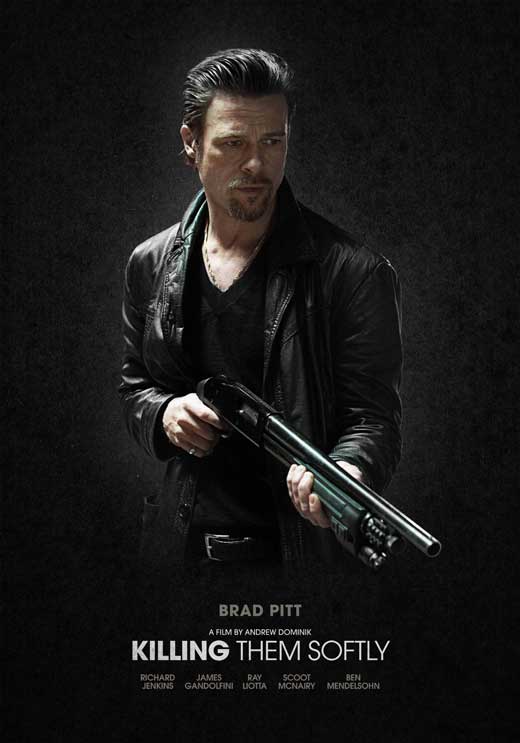
What do these movies have in common? None of them are worthy of such high grades. It's all uninspired or unoriginal or unrealistic dreck. Consequently, when I heard that Killing Them Softly, the new film by Andrew Dominik (the director of 2007's wonderful The Assassination of Jesse James by the Coward Robert Ford), received an "F"--one of only 8 films ever to receive that grade--on the notoriously inaccurate CinemaScore, I was even more interested to see it. And my excitement was certainly well-justified: Killing Them Softly is a really good American film, a story about how even gangsters were susceptible to the economic recession that is filled with unlucky criminals, hitmen, snappy-vulgar dialogue, and flashes of brutal, realistic violence.
     Within a few seconds after the lights in the theater dim and Killing Them Softly starts, two things are clear: Andrew Dominick is a director with an incredible visual flourish and this is a film that is very present in its political metaphors. Barack Obama's voice from an important speech is cut back and forth with eerie music and views of a criminal who is barely surviving. This man, an Australian drug addict named Russell (Ben Mendelsohn) and his friend, the nervous Frankie (Scoot McNairy), are two scum-suckers who get talked into a seemingly easy job by their sort-of boss: they are to rob a big-buy-in cash card game filled with gangster players. This game is run by Mark Trattman (Ray Liotta, in a different role than normal, playing off of his typical typecasting), a man who hired two other dudes to rob the first card game he arranged, pretending he was one of the victims and splitting the cash afterwards. The beauty of this job is simple: these dangerous men playing in the high-stakes game will think that Mark has pulled the same shit again, and he will get blamed for this card-game incident. Russell and Frankie will be able to ride off into the sunset as Markie gets whacked, even though he wasn't actually in on this robbery.
     Enter Jackie Cogan (Brad Pitt), a man who solves mob problems, generally with the barrel and bullet of a gun. One of his rules is he doesn't like to kill anyone that he knows...doesn't want to get close to them. When that happens, emotion tends to get in the way. He likes to "kill them softly", from a distance, so he doesn't have to feel guilt or smell the piss that dribbles down the soon-to-be-dead man's pants. Pitt displays much of the same calm ferocity that he showcased in Assassination of Jesse James. He is great, as usual. As things happen, and more people need to die, Cogan often meets with a higher-up, kind-of middle man executive to the decision-making CEO's of the crime syndicate named Driver (Richard Jenkins). These conversational scenes echo the same problems of normal civilian employees in America: the inability to give out more money and the carefulness that business owners feel when their revenue stream has taken a major hit.
     One surprise in Killing Them Softly was the great James Gandolfini (I hope I don't have to tell you of The Sopranos fame...), portraying a character named Mickey who is brought into town by Cogan to perform one of the violent hits. It's been a few years since Cogan has worked with Mickey, and the years haven't been kind: because of money and marital problems and a violent alcoholism, Mickey has become fat and angry, spewing vulgarities at the nice waiters who serve him his drinks and nice whores who service his sex drive. He paints a great picture of what men like this must end up as when the money runs out and they have no use anymore. The real star of Killing Them Softly, though, is director Andrew Dominik and his skillful use of the camera. The film--other than the occasional bangs of bloody violence--is mainly a bunch of conversations about who should and who shouldn't die as America's economy is crumbling. But even the most normally-boring conversations, like one between Russell and Frankie as Russell is in a semi-sleep state due to drugs and exhaustion, are inspired and beautiful to watch. Or take one scene of slow-mo killing (a technique that has become incredibly stale since The Matrix) that is transfixing, even though is uses Bullet-Time! Truly visionary stuff.
     Sure, sometimes the political underpinnings that show up during many scenes in Killing Them Softly are heavy-handed and a bit obvious: we don't need a radio soundbite of George Bush speaking at a convention or a news clip of Barack Obama on a bar television screen to draw similarities to the situations that the film's characters face. And sure, this also isn't new territory in regards to story: much of this has been done before on dozens of occasions throughout the last twenty years of film and television. But the combination of all the aspects--the great cast, the snappy script, and specifically Dominik's direction--adds up to a small and worthwhile film that depicts how violent men who make their money illegally deal with a collapsing economic system.     (B+)

Thursday, November 29, 2012

Lincoln: Spielberg's Annual History Lesson

     It's extremely obvious to every serious movie-goer that Daniel Day-Lewis is probably the greatest living actor. His ability to fully enter a character's mannerisms and psyche (he even stays in character throughout the entire movie shoot when he's not on camera) with ease is awe-inspiring and always fun to watch. So when Day-Lewis was announced as the titular star in Steven Spielberg's historical and fair Lincoln, it came as no surprise: of course he was cast as Lincoln. Of course he will be totally indistinguishable from the 16th President of the United States. Of course--during awards season--he will sweep up plenty of Best Actor statuettes. It's all so obvious and predictable, and it's...true. Day-Lewis, shedding much of his normal ferocity and anger (like he displayed in Gangs of New York and There Will Be Blood), becomes Abraham Lincoln, high-pitched voice, tall stature, intelligence and all. And though the film seems like it could have played late at night on the History Channel with a no-name cast and crew, Day-Lewis's performance (and a couple others, namely Sally Field portraying Lincoln's wife, Mary Todd) solidifies this film as a must-see, even though the climax is obvious and the theater-esque direction (most of the film takes place only in a couple of different rooms) makes it--for me--a once watch.
     Other than the basics, before seeing Lincoln, I never knew that much about Lincoln. This is assuming that his portrayal is accurate, which is a statement that most historians tend to agree with. Tony Kushner's screenplay is full of little details that Day-Lewis brings to life with great respect: a plainspoken nature that the common folk could relate to, a love of telling stories that have a pertinent lesson or moral at the end, his own horror of a dead child, his unrelenting fortitude on the issue of abolishing slavery. The story is only a small part of the man's life: it takes place during his final months alive as he tries to pass the 13th Amendment in the House of Representatives. But it's powerful and emotional. And melodramatic in places, too--this is a 21st Century Spielberg film after all. Remember last year's War Horse? This is a director that pulls at the heartstrings as much as possible.
     All of the performances in Lincoln are predictably stellar. Sally Field steals the show as Lincoln's wife, a woman who has suffered an incredible amount of physical and emotional pain and sometimes takes it out on the men in her life. She is funny and heartbreaking, and she displays a ferocious insanity at times that will surely be recognized at the end of the year. Secretary of State William Seward is played by David Strathairn, a man who is always on Lincoln's side even when his opinion differs from the President. Another great performance is Tommy Lee Jones portraying Rep. Stevens, who will go to just about any length to abolish slavery. The rest of the cast: too many great names to mention, and they all play their part with typical excellence, however small or large that part may be.


     The film starts a bit slow, but it builds to inevitable well-acted courtroom scenes that showcase how divided the nation was during this time of war and slave ownership. Lincoln needed a certain number of votes from undecided (or easily swayed) House voters to pass his crown achievement 13th Amendment. Lincoln will do just about anything for these votes, and he feels that his Presidency is all for naught without passing this important Amendment that will change the course of history. Spielberg does a good job of showing us that backroom political dealings and manipulations are not just a part of modern politics. These things were happening--though in a different way--150 years ago. A person's vote can be changed by a variety of means.
     Insults fly from every angle during the court scenes. If only some of these tactics could be used today! It would make CSPAN must-see T.V. Lincoln runs into a major problem just as he's on the cusp of passing the Amendment. There are talks of peace and the war ending, but if the war ends even slightly prematurely (and even though it would save the lives of thousands of young soldiers and the horrific pain that their families would feel) all of the work that he has done on his prized political possession would come crashing down, because ending slavery with the 13th Amendment would mean ending the war anyway.
     If you go into Lincoln expecting epic Civil War battles echoing another Spielberg historical epic, Saving Private Ryan, you might walk away disappointed. This isn't a film about a gigantic war campaign. It's a film about a different type of campaign: a theatrical movie about speech and discussions that involve changing minds and overcoming prejudices. Day-Lewis's performance is subdued and un-showy, and although it was awesome, I wouldn't call it the best of the year: I'd give that honor to Joaquin Phoenix in The Master or John Hawkes in The Sessions. Lincoln is a history lesson, but I mean that in the best sense possible. In Spielberg, you have a teacher that is funny and entertaining, a teacher that masks learning with a wonderful story. But, as great as Lincoln is during most of its run time, occasionally I still had the feeling I was sitting in a desk at school, waiting for the next burst of excitement.     (B+)

Friday, November 23, 2012

The Sessions: Notes on Hiring a Sex Surrogate

     Mark O'Brien is a poet and journalist. He is also (basically) paralyzed from the neck down from contracting polio when he was a child, spending most of his life either inside an Iron Lung--one of those large medical ventilators that allows a person who has lost most muscle control to breathe with regularity--or being wheeled around on a gurney by a revolving door of caregivers that also feed, wash, and clothe him. Mark, always up for an experiment, begins to wonder what it would be like to be intimate with a woman (he's a virgin). Although he doesn't have control over any part of his body below his neck, he still has sensations and can fully achieve erections and ejaculation, but he doesn't have any control of either. So he hires a sex surrogate--a semi-prostitute that allows people with sexual problems to experience their innermost desires in a controlled environment. This is the true story that The Sessions is based on, a short and sweet film written and directed by Ben Lewin (a polio survivor himself) that ranks among the year's best due to its touching performances, particularly John Hawkes as the disabled Mark O'Brien.
     This is a great adult movie about sex and desire that doesn't resort to gross-out gags or rely on the physiques of flawless actors to tell its story. Mark (Hawkes) is a lover at heart: he has a way with words and a self-deprecating humor that women find charming, especially since words are all Mark can use to woo. Though Mark is very religious, and he begins a fruitful friendship with Father Brendan, a new priest at his church played with humor and sensitivity by William H. Macy, intimacy with a woman is all he really desires: he wants to do this because he thinks his time is running out. God will give him a free pass and look the other way for this minor sin. The heart of the film is Mark getting wheeled from place to place, usually to confessional with Father Brendan or to a private room where Mark starts his sessions.
     The sessions are extremely nerve-wracking for Mark, particularly the first one. His aid, Vera (Moon Bloodgood), a nice young woman who would do anything for Mark, wheels him into a room, places him on the bed (the real O'Brien was only 4'7" and 60 pounds) and he waits for the surrogate. Mark has only spoken to her on the phone to arrange the meeting. He's never seen her. The tension is palpable: will the woman live up to Mark's expectations? Will she be gentle enough (Mark only likes to be touched very delicately)? Will he find her attractive? The "She" in question is Cheryl (Helen Hunt), and she grounds the film in a reality instead of letting it slip away into a Lifetime movie corniness. Hunt's performance is tactical and brave (not just because she's fully nude in most of her scenes). She takes her profession seriously and thinks of herself as more psychiatrist than slut. She's married to a philosopher that doesn't mind her odd profession and has a teenage son.
    Knowing that Mark, due to his condition and lack of relationship experience, becomes attached quickly and easily falls in love, Cheryl sets up some important ground rules: they will only meet six times, and it won't get too personal. They'll focus on "body awareness exercises", finally culminating in the last session where they will finish with real intercourse with actual, honest-to-goodness penetration. Through these sessions, we learn more about these two characters and what exactly they want out of life. And wouldn't you know it? These two begin to grow more during these two-hour meetings than they have during the past years of their auto-pilot lives.
     It's a nice story, one that brings smiles and tears through honesty and sadness. But it's a great movie for one reason and one reason only: the performance of John Hawkes as Mark O'Brien. For the past few years (particularly as the meth-addicted Teardrop in Winter's Bone and the chilling cult leader Patrick in Martha Marcy May Marlene), Hawkes has been able to live inside his roles with a realism that makes it seem like you're watching a real person instead of an actor portraying a character. He's never been better than here: Spending the entire film on his back, his spine bent at a sharp angle (he supposedly filmed the entire movie with a large foam piece under his back, causing actual back problems [not that minor back pain compares to having actual polio]), Hawkes builds a character with a high-pitched questioning voice and realistic facial expressions that show happiness and sadness in equal, exquisite measure. Through his performance--and to a lesser extent, Hunt's--we realize that The Sessions is about care and kindness, the kind that goes far beyond asking "How are you?" without expecting or caring about an answer. It's about experiencing what you want in life, whether you're paralyzed and stuck in an Iron Lung or healthily walking on your own two feet.     (A)

Tuesday, November 13, 2012

Bond Goes Back to Basics in Skyfall

     Plenty of people were pissed when Daniel Craig was chosen as the new bond back in 2005--he was too small, too blond, too weathered. A lot of tensions were eased when Craig's first foray into the storied franchise, 2006's Casino Royale, was released into cinemas. Although a few maintained that their fears were justified (Bond had turned into a humorless killing machine that would give Jason Bourne a run for his money), it was clear that Bond had entered a new age of darkness and excitement that was keeping up with the world's collective anxieties. Two years later, Quantum of Solace left a bad taste in many a viewer's mouth: its confusing plot and typical action caused the film not feel like a Bond movie, though it was still entertaining enough.
     I've never been a huge fan of the Bond movies: I can barely make it through some of the older ones, and it's rare that the films make any sort of good progress between the bi-yearly incarnations. So where could the series--heading into its 50th Anniversary year after much legal trouble involving the production and studio--go? Apparently, the only direction was up: bringing in the great drama director Sam Mendes (creator of the fantastic films American Beauty and Road to Perdition)], Skyfall (the 23rd entry in the long-running list based on Ian Fleming's books) is an absolute blast, a stripped-down simple story of James Bond facing an awesomely-over-the-top villain, his childhood, and the inevitability of death. Progress forward is reaching back into the best aspects of the Bond canon.
    Skyfall throws you into the plot quicker than the film will make $100 Million dollars: Bond is chasing down a running man who has stolen an important hard drive with information that may affect the world. It's one of the most exciting openings of the year: with motorcycles, trains, excavators, and sniper rifles all making appearances, finally culminating in a surprising event and the new theme song sung by Adele. The opening action and great title sequence sets the tone for the rest of Skyfall: we're back to basics, a resurrection and merging of everything that has gained James Bond millions of fans over the year--a winking humor, a sense of purpose, a simple (yet exciting) story.
     M, played with an expert authority by Dame Judi Dench, begins to be in deep shit: that hard drive has data that could destroy MI6 and all of the undercover agents that are supposed to be protected by the government agency. She's getting old and tired and would like to leave a lasting legacy, but an interesting connection with a certain villain brings her knowledge to the forefront. And what would a great Bond movie be without a great villain? Javier Bardem (already a bad-guy master after his incredible job in the adaptation of Cormac McCarthy's No Country for Old Men) portrays Silva, a homo-erotic man with a penchant for showmanship and a disgusting grin from swallowing one-too-many cyanide pills. He's mischievous and funny, and he provides a good foil to Craig's portrayal of a Bond who has gained a calm control after experiencing death.
     To defeat Silva, a hacker who seemingly has control of every single computer system in the entire country, Bond must confront something scarier than Silva's deformed smile: his sense of self and memories of being a child orphan. I won't give away the climax, but it all comes together in a great showdown that allows Craig to add a little dramatic flair to his otherwise stone-faced portrayal of Bond. New characters make appearances that set up their inevitable story arcs in future Bond films: Ben Whishaw is Q, a computer nerd who is bound to help Bond with new gadgets in the later films. Ralph Fiennes is a higher-up in government that may be extremely more important than his normal job makes him seem. And Naomie Harris (of 28 Days Later fame) is an agent that harms and helps Bond in equal measure.
     The Bond films needed this. Though Casino Royale seemed like an origin story, one that echoed the sentiments of Christopher Nolan's first Bruce Wayne film, Batman Begins, it's Skyfall that becomes the rebirth that Ian Fleming's character really needed: a story that's both simple and emotional that brings forth questions of Bond's past that have never been raised before. It makes the point that although villainy, in this day and age, can be as uncomplicated as gaining access to fire-walled Internet sites and secret government websites, we still need heroes to root for, heroes to cheer for, heroes who can come to grips with their own personal demons to take down a force set to demolish the notion of humanity. Skyfall is Bond, and everything that is great about the character. Bond resurrected.      (A)
   

Sunday, November 4, 2012

Movie Meta: Seven Psychopaths

     Seven Psychopaths is one of those films that winks at the audience in a self-aware fashion. Marty (Colin Farrell) is a screenwriter who is writing a script with characters that are like his friends or are his friends. The movie that Marty is writing in Seven Psychopaths is titled "Seven Psychopaths". He basically only has a title until his friends tell him stories or give him ideas about psychotic violent people who murder, maim and torture others. Much of the actual Seven Psychpaths (the one that you and I are watching, not the one in which Marty is writing) takes place inside Marty's mind, playing out his movie within his head. Other scenes showcase Marty's actual life, with a dog-napping plot involving Marty's best friend Billy (Sam Rockwell, in one one of his best performances ever), his accomplice (Christopher Walken) and a dangerous gangster (Woody Harrelson) who has separation anxiety due to his missing Shih Tzu. Sometimes the real Seven Psychopaths blends with Marty's own version. Consequently, the film is a bit jumbled, but it's fun and funny enough to overcome its own messiness.
     When Martin McDonagh broke onto the film-making scene in 2008 with his wonderful black comedy In Bruges, he was rightly labeled as an Irish Tarantino, a writer/director with a penchant for snappy, vulgar dialogue and a visually-cool direction showcasing quick flashes of extreme violence. Seven Psychopaths isn't as coherent as In Bruges--nor is it as good, either--but it still contains the same personal flourishes of McDonagh. Marty is an alcoholic, a writer who seemingly doesn't even know where to begin his story. Rockwell's Billy decides to help his friend out by putting a classified advertisement in a magazine, asking people with crazy stories of insanity to sit down with Marty and tell their stories, sparking some inspiration.Billy kidnaps dogs for a living with his partner Hans (Walken): they go to the city parks, swiping the dogs from rich owners then returning them later for the reward, refusing the money at first like good citizens.
     There are a lot of psychopaths in this film. At least seven. When Billy and Hans take the wrong dog (owned by the previously mentioned Charlie, Harrelson's loose cannon), it sets in motion a series of events that echos some of the plot points in Marty's growing screenplay. There's also a serial killer on the loose offing some of the characters in the film, nicknamed the Jack of Diamonds, because he leaves that specific playing card at each of murders. He comes and goes without much explanation like many of my thoughts in this review. There's also a terrifying Quaker and a Vietnamese suicide bomber who wants revenge because his family got murdered at the massacre at My Lai. I'll leave it to you to find out whether these characters are a part of Seven Psychopaths or the script of Marty's "Seven Psychopaths".
     The best part of this film is easily the fun performances. Farrell's Marty is a nice un-showy acting job, a nervous Irish guy who drinks too much alcohol when he is anxious. He lets the other actors play off of his nervousness.  Harrelson has fun with Charlie, a man who would die for his dog but not for a human. Two portrayals really shined for me: Sam Rockwell (who is always under-appreciated) is totally awesome and badass in Seven Psychopaths. The film, to me, was mainly a showcase of his hilarious insanity. Every sarcastic quip and pull of a gun's trigger was pure comedic excellence (a lot like Farrell's performance in McDonagh's In Bruges). Typically, I find Christopher Walken to be a little too much, as he plays essentially the same character in film after film; that can grow tiresome. But I loved his portrayal of Hans in Seven Psychopaths. He showcases a weirdness and likability, grounding the film closer to reality.
 
      There isn't much of a female presence in Seven Psychopaths. They're either being called a "fucking bitch" or getting shot in the stomach. But that's not to say the film is sexist: it's so self-aware that the characters talk about females being dispensable characters in typical movies in the same genre. Late in the film, the three friends travel far out into the desert to get away from gangster Charlie, drink, and jointly work on Marty's screenplay. They throw out the idea of a final shootout, guns blazing and heads exploding. Do you think, in a film that's as cognizant of itself as Seven Psychopaths is, the climax matches up with the character's ideas? You should know what to expect in a film that constructs and then dismantles genre conventions as solidly as Seven Psychopaths does.     (B+)